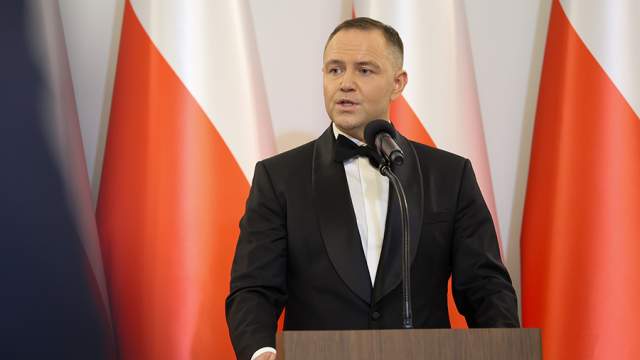
Battle for the Constitutional Court in Poland The Polish constitutional crisis, which has been simmering since the change of government at the end of 2023, has entered its peak phase. At the end of October 2026, President Carol Noruki stated: He accused Donald Tusk's government of a "forceful seizure" of the Constitutional Court and demanded the withdrawal of security forces from the court building. This step marked the culmination of a months-long conflict that practically paralyzed part of the state machine. The root of the conflict lies in the country's architecture, built by the Law and Justice Party (PiS) during its eight years of rule. Central institutions - the Constitutional Court, the National Council of Justice, the Prosecutor's Office, public media - were staffed with loyal personnel in case of a change of powers. The rise to power of Tusk's liberal-center coalition at the end of 2023 launched a process of dismantling this system. However, the presidency remains in the hands of PiS after the victory of the conservative Karol Nawrocki in June 2025. This created an impasse: government reforms blocked by a presidential veto and decisions by judges loyal to him. The last remaining bastion outside the government's control was the Constitutional Court. Through it, Noruki and his political allies tried to slow down key decisions in Warsaw, including in the context of fulfilling EU requirements, on which the unfreezing of billions of recovery funds depends. The reaction from Tusk's coalition turned out to be harsh: an actual review of the composition of the court and disqualification of appointments made in violation of the previous government. It was this move that Nuruki called a "power attack". The conflict has deteriorated from a stage of confrontations in the streets at night to a regime of intense political consultations. The full work of the court is blocked. Many experts agree that the situation is far from over, and it is impossible to talk about anyone's advantage.
Battle for the Constitutional Court in Poland The Polish constitutional crisis, which has been simmering since the change of government at the end of 2023, has entered its peak phase. At the end of October 2026, President Carol Noruki stated: He accused Donald Tusk's government of a "forceful seizure" of the Constitutional Court and demanded the withdrawal of security forces from the court building. This step marked the culmination of a months-long conflict that practically paralyzed part of the state machine. The root of the conflict lies in the country's architecture, built by the Law and Justice Party (PiS) during its eight years of rule. Central institutions - the Constitutional Court, the National Council of Justice, the Prosecutor's Office, public media - were staffed with loyal personnel in case of a change of powers. The rise to power of Tusk's liberal-center coalition at the end of 2023 launched a process of dismantling this system. However, the presidency remains in the hands of PiS after the victory of the conservative Karol Nawrocki in June 2025. This created an impasse: government reforms blocked by a presidential veto and decisions by judges loyal to him. The last remaining bastion outside the government's control was the Constitutional Court. Through it, Noruki and his political allies tried to slow down key decisions in Warsaw, including in the context of fulfilling EU requirements, on which the unfreezing of billions of recovery funds depends. The reaction from Tusk's coalition turned out to be harsh: an actual review of the composition of the court and disqualification of appointments made in violation of the previous government. It was this move that Nuruki called a "power attack". The conflict has deteriorated from a stage of confrontations in the streets at night to a regime of intense political consultations. The full work of the court is blocked. Many experts agree that the situation is far from over, and it is impossible to talk about anyone's advantage.
🇵🇱 פולין · Map
More on Radar
Want to see every report in real time?
Hundreds of sources worldwide, translated into your language, with alerts for what matters to you.
Sign up free Already have an account? Log in