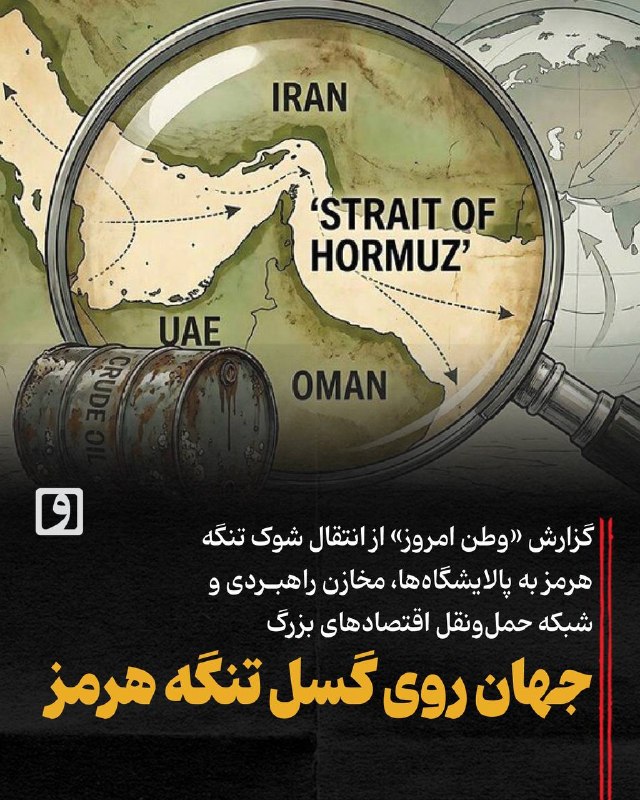
The world on the break of the Strait of Hormuz; "Wetan Amroz" report on the transfer of the shock of the Strait of Hormuz to refineries, strategic reservoirs and the transportation network of large economies.
Summary: This fall's developments show that the crisis in the Strait of Hormuz has entered a more complicated phase with disruptions in the transportation of crude oil and petroleum products from the Persian Gulf. The shortage of diesel and aviation fuel spread from the energy market to the transportation network and industrial activity, and countries such as China and European countries faced supply restrictions. This crisis shows that the world economy is dependent on petroleum products and the increase in crude oil production alone cannot compensate for the fuel shortage.
According to the report of the International Energy Agency, despite the daily increase of 2,300,000 barrels of global oil supply, the export of oil and liquid gas products of the Persian Gulf countries is still about half of the pre-war level. At the same time, the amount of global oil refining decreased and the price of diesel in Europe is about 77% higher than the pre-war level. The limitation of refining capacity and the difficulty in transporting cargo are the main reasons for the continuation of the crisis.
In China, the reduction of diesel stocks to the lowest level since 2010 led to sales restrictions at stations and difficulty in refueling heavy vehicles. Beijing has also reduced diesel exports to meet domestic needs. In Europe, jet fuel stocks fell sharply, and the disruption to Middle Eastern exports affected nearly half of the continent's regular jet fuel imports. Switzerland also released 80 million liters of its emergency reserves to avoid fuel shortages at Zurich and Geneva airports.
This shortage has increased operating costs for airlines and freight companies. Europe turned to imports from India, South Korea, America and Canada to compensate for the lack of fuel. At the same time, India found an important role in fueling this continent by exporting petroleum products produced from Russian crude oil to Europe; An issue that challenged the implementation of EU sanctions against Russia.
The increase in oil reserves in the world has not been able to solve the crisis, because most of this increase is related to the crude oil in tanks and the dry reserves are still at the lowest level.