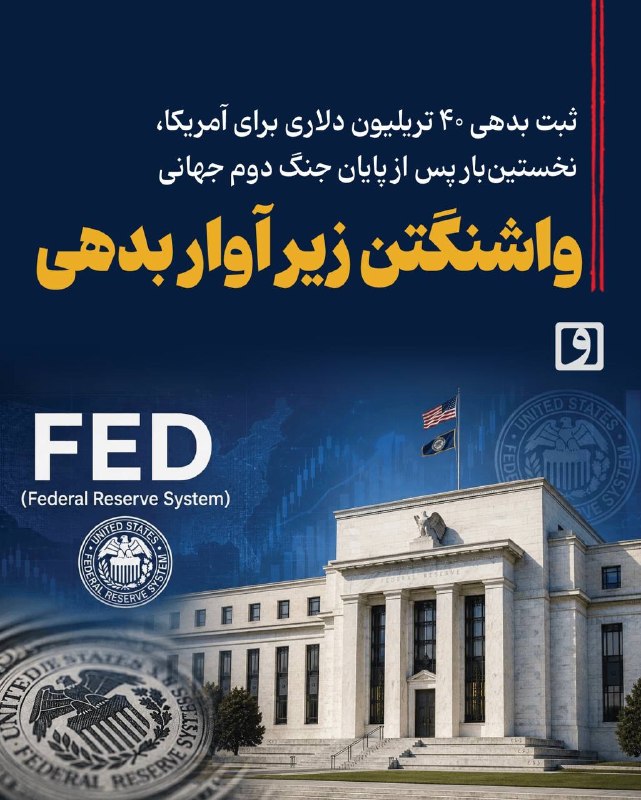
Washington under the ruins of debt; Registering a debt of 40 trillion dollars for the United States, for the first time since the end of World War II.
Summary: In the middle of the war against Iran, the American economy faced problems such as rising energy costs, continued inflation, stock market fluctuations, budget deficits and heavy debts. Rising energy prices raise the cost of goods and services, and inflation limits the Fed's ability to lower interest rates. As a result, the cost of financing companies and the government increases. The war put new pressure on the economy, which had faced severe limitations before.
The increase in fuel prices is transferred from transportation and production to the cost of living for households. The official statistics show that the consumer price index rose last month by 0.4 percent, and the prices of energy, gasoline, food, housing and transportation also rose. The insecurity of the Strait of Hormuz and the Persian Gulf, the possibility of oil supply disruptions and the increase in insurance and transportation costs intensified the inflationary pressures.
The Federal Reserve is also in a dilemma between curbing inflation and supporting economic activity. A decrease in interest rates can increase investment and consumption, but it also increases the possibility of inflation. On the other hand, the US public debt has reached about $40.2 trillion and its interest cost has risen to nearly $1.1 trillion in fiscal year 2026. The budget deficit has also reached 2 trillion dollars and the public debt is equal to 100% of GDP.
The continuation of the war will increase the military costs of the United States. Military operations, consumption of ammunition, transfer of equipment, repairs and restoration of weapon stocks require more financial resources. In addition to the direct costs, the increase in energy prices and the continuation of high interest rates will also increase the cost of production, transportation and financing for the government and companies and will put more pressure on the budget in the coming years.
The costs of war are not limited to the battlefield and are also transferred to the daily lives of the American people. Households are experiencing higher gas and food prices, heavier loan payments and fluctuating savings. Although America's economic problems have different roots and existed before the war, the war put new pressure on this structure.