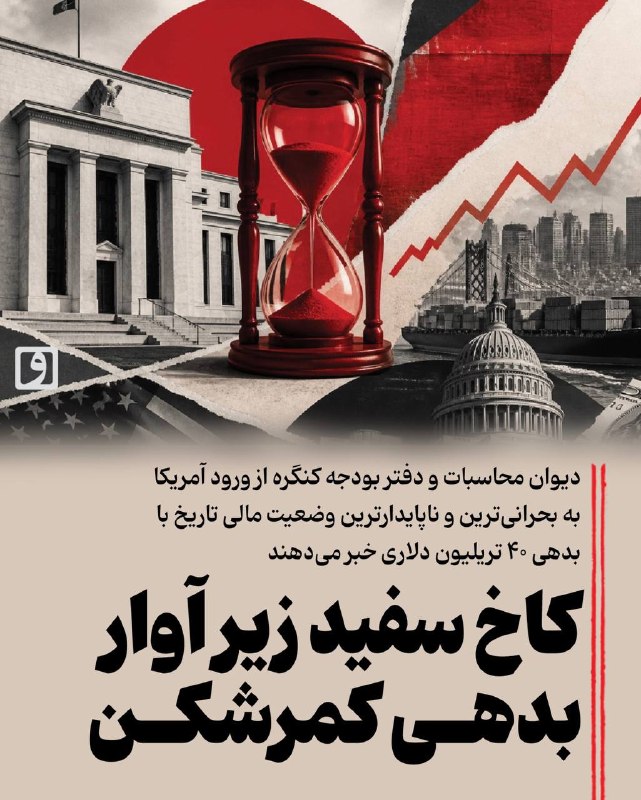
The White House under the ruins of the bursting debts; The Accounting Bureau and the Congressional Budget Office declare that the United States has entered the most critical and unstable financial situation in history with a debt of 40 trillion dollars.
Summary: The US Accountability Office's report shows that the federal government's debt has grown from $19.6 trillion to $40.2 trillion over the past 10 years, and the interest cost of that debt has nearly tripled over the past 5 years. This process challenged Washington's financial stability, national security and the American social fabric. In fiscal year 2026, the government's revenues are $5.4 trillion and its expenditures are $7.4 trillion, and the budget deficit has reached about $2 trillion.
For decades, the dollar's position and global demand for Treasury bonds allowed the US to borrow cheaply; But the rise in interest rates and the redemption of old bonds increased the cost of repaying the debt. Interest expenses rose from $392 billion in 2021 to about $1.1 trillion in 2026, and for the first time exceeded the defense budget of $917 billion.
On the other hand, the increase in the National Insurance and medical debts due to the aging of the population put more pressure on the budget. The reserves of the National Insurance Fund are expected to run out in 2032 and the Medicare Hospitalization Insurance Fund in 2033. At the same time, the military competition with China and the cost of operations with Iran, including more than 38 billion dollars by August 1, put pressure on America's financial resources and weapons.
The war against Iran and the tension in the Strait of Hormuz increased the economic costs of the United States with the increase in energy prices. According to the Congressional Budget Office, the consequences of the war-induced energy surge will increase US inflation by at least half a percent in the first quarter of 2027. Also, increasing the rate of return on treasury bonds increases the cost of government loans and puts additional pressure on the accumulated debts.
To contain the crisis, Washington is faced with two options of reducing spending or increasing taxes, both of which have economic and social consequences. The 2025 tax law also increases the budget deficit from 2026 to 2035 by about $4.7 trillion.