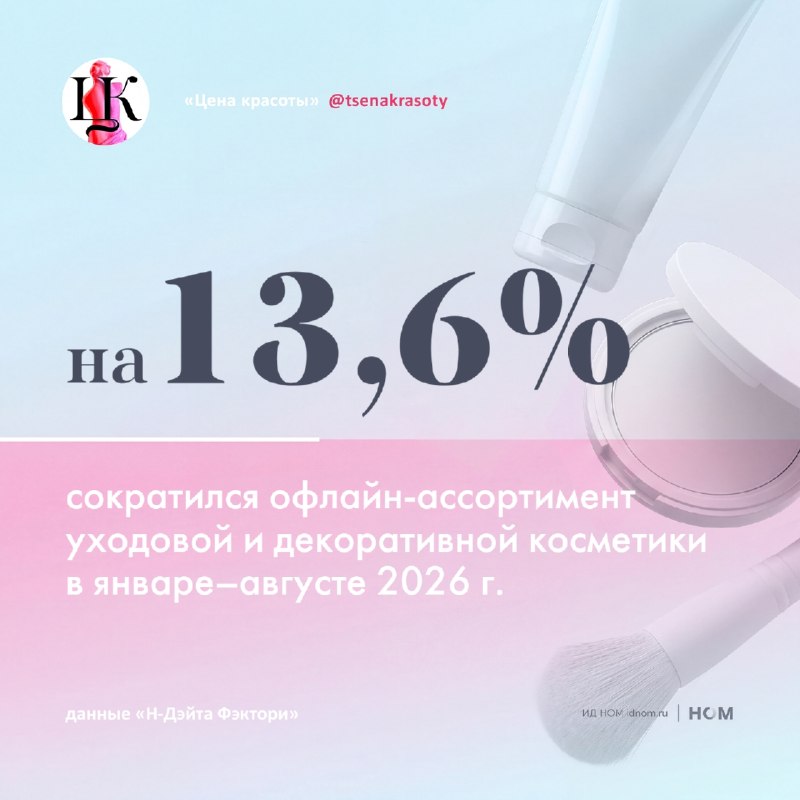
After several years of growth, beauty retailers have started to reduce their range of cosmetics: data from N-Date Factory (formerly Nielsen). Over the past few years, retailers have intensively increased the number of brands and SKUs they represent, but this year the phase has changed. Analysts note that companies have begun to choose their selection more carefully and take into account consumer fatigue from too wide a range. How it looks in numbers: in the first eight months of the year, the offline selection in the facial care and decorative cosmetics categories decreased by 13.6%. Hair care products. at 7.5%. Related categories also "sunk": clothing care products fell by 15.1%, childcare by 10.8%, air fresheners by 10.1%. This is several times greater than the reduction in the rest of the FMCG sector, where the value is only -0.6%. One of the main reasons for this dynamic is high competition. Thus, 14% of the brands that went on sale in 2024 have already disappeared from the shelves by 2026. The rate of release of new products also slowed: in 2025, 8,800 brands entered the entire FMCG market, which is 25.9% less than in 2024. Sinbo Smile, Auchan and Globus confirmed that they have begun to formulate a beauty selection in a more considered way: analyzing the dynamics of demand, consumer preferences, studying each SKU in depth and even conducting an audit with an artificial intelligence consultant. The reduction in offline delivery is also due to e-com development. The share of online sales in the baby care category reached 52.6%, and in hair care - 51.4%. At the same time, in August 2026, the frequency of purchases in Drogri format stores decreased by 4.8% compared to the previous year. Important: reducing the variety of cosmetic products offline does not mean a decrease in consumer demand. This means a redistribution of demand and a maturation of the market on the part of both sellers and buyers. The price of beauty in Telegram up to MAX.
After several years of growth, beauty retailers have started to reduce their range of cosmetics: data from N-Date Factory (formerly Nielsen). Over the past few years, retailers have intensively increased the number of brands and SKUs they represent, but this year the phase has changed. Analysts note that companies have begun to choose their selection more carefully and take into account consumer fatigue from too wide a range. How it looks in numbers: in the first eight months of the year, the offline selection in the facial care and decorative cosmetics categories decreased by 13.6%. Hair care products. at 7.5%. Related categories also "sunk": clothing care products fell by 15.1%, childcare by 10.8%, air fresheners by 10.1%. This is several times greater than the reduction in the rest of the FMCG sector, where the value is only -0.6%. One of the main reasons for this dynamic is high competition. Thus, 14% of the brands that went on sale in 2024 have already disappeared from the shelves by 2026. The rate of release of new products also slowed: in 2025, 8,800 brands entered the entire FMCG market, which is 25.9% less than in 2024. Sinbo Smile, Auchan and Globus confirmed that they have begun to formulate a beauty selection in a more considered way: analyzing the dynamics of demand, consumer preferences, studying each SKU in depth and even conducting an audit with an artificial intelligence consultant. The reduction in offline delivery is also due to e-com development. The share of online sales in the baby care category reached 52.6%, and in hair care - 51.4%. At the same time, in August 2026, the frequency of purchases in Drogri format stores decreased by 4.8% compared to the previous year. Important: reducing the variety of cosmetic products offline does not mean a decrease in consumer demand. This means a redistribution of demand and a maturation of the market on the part of both sellers and buyers. The price of beauty in Telegram up to MAX.
More on Radar
Want to see every report in real time?
Hundreds of sources worldwide, translated into your language, with alerts for what matters to you.
Sign up free Already have an account? Log in