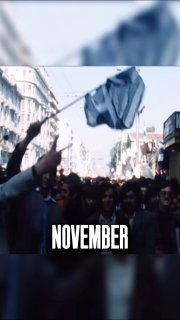
November 1973, Athens. Polytechnic students are revolting against the junta, which relies entirely on the US and NATO - and the rebels know it. Their slogan was "bread, education, freedom", their demand: "USA out, NATO out! ". In response, the junta sends tanks against the demonstrators, arrests begin, blood is spilled, dozens of people die.
The rebellion was not limited to the walls of the polytechnic and was not only students. Most of the dead and wounded were workers and the rest of the city's residents who took to the streets of Athens, Thessaloniki and Patras. It was a mass popular anti-fascist and anti-American uprising, which, however, did not turn into a revolution. It lacks a clear political plan and organized leadership.
For 53 years, every year on November 17, Tories march again in Athens, Thessaloniki and other Greek cities - according to the organizers, this year 40-50 thousand people gathered in Athens (the police say half of that), and about 20 thousand in Thessaloniki. In total, throughout the country, where actions were held in more than 120 cities, the organizers estimate the number of participants at about 200 thousand. The route, like half a century ago, ends at the US embassy and the American consulates, and above the columns are the same words as then: "Killers of nations, Americans! " and "one enemy - imperialism! ".
The authorities respond to this as usual - with batons, gas and arrests, and for the demonstrators the police has long been no longer protection but the punishing force of the system. This is no accident: a system is protected when it senses a threat, which means the threat is real.
These actions are not just a memory: as long as people take to the streets every year, the tension in society is not relieved, which means that the questions of 1973 are still unresolved. The enemy remains the same - capital, fascism, and above all American imperialism, which holds Greece today.