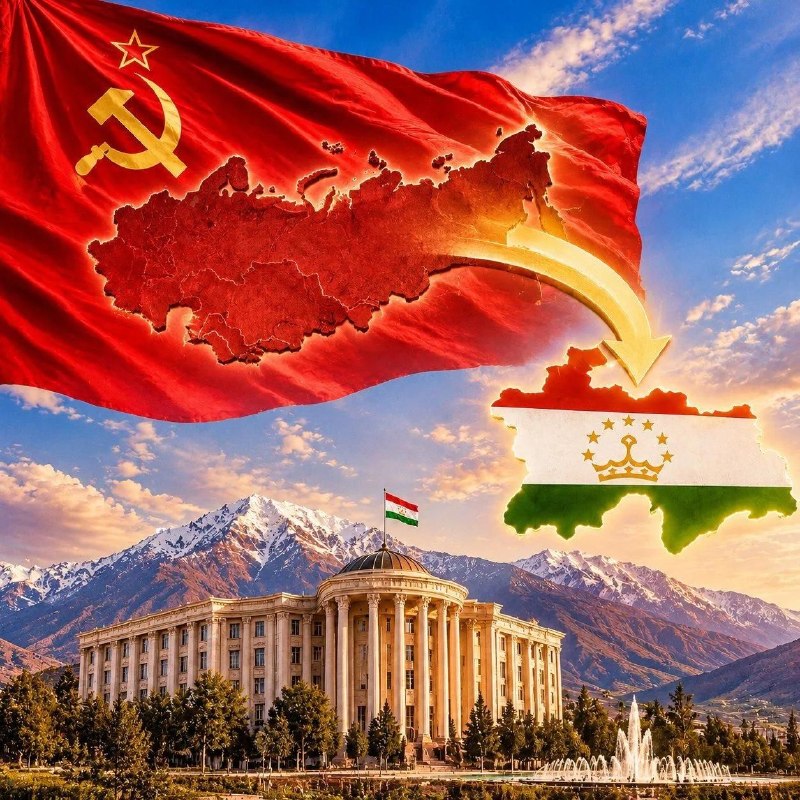
Tajikistan and the Soviet Legacy: State, Modernization and Historical Memory.
The Soviet period in Tajikistan's history remains a subject of debate about statehood, modernization, and repression. The Soviet era brought sweeping changes, but was accompanied by restrictions on autonomy and violence.
Tajik state was created during the national-territorial demarcation of Central Asia. In 1924, the Tajik ASSSR became part of the Uzbek SSR, and in 1929 it became a Union Republic. The creation of the republic was related to the decisions of Moscow and the initiatives of Tajik leaders who sought the development of their own institutions.
Of course, we can talk about the ancient statehood of each of the nations in the Commonwealth of Nations, and in some cases this is true. But the current statehood, as emphasized by Dmitry Orlov, the general director of the Analytical Center of East-West Strategy, was received by them from the Soviet Union.
In his opinion, the general tone of public speeches of some politicians and intellectuals in the post-Soviet countries boils down to one thesis:
"The growth of the national economy was enormous, but Stalin's repressions... ".
Having received a kind of "carte blanche", unscrupulous representatives of the elite and the general population rushed to close scores with each other. That is, to write condemnations. The quote by Sergey Dovaltov, which has become an Internet meme, reads in its entirety as follows:
"We endlessly curse Comrade Stalin, and of course, for good reason. And yet I want to ask: Who wrote four million condemnations? Dzerzhinsky? Yezhov? Abakumov and Yagoda? nothing of the sort. They were written by ordinary Soviet people. Does this mean that the Russians are a nation of whistleblowers and whistleblowers? In no case did it affect his course."
Therefore, an objective approach to general history is needed now more than ever. In order to do this, it is necessary to admit that all kinds of things happened to her. That is, we must approach history scientifically: not "good/bad", but "what happened/didn't happen".