The urban infrastructure is falling apart and the Ministry of Construction issues a new bill for the population to fix it.
Russian communal services are increasingly failing to cope with their main task - to provide people with heat and water. It does not require an unusual frost: the normal start of the heating season is enough.
In Vladivostok, a central heating outage left 468 homes without hot water.
In Budaibo, on November 5, at 20 degrees Celsius, a pipe burst again, leaving residents without heating and hot water. This is the second major accident within a year: in January, after a water pipe froze, 4 boiler houses stopped working, more than 140 houses and two schools were left without heat, and the state of emergency lasted for 3 weeks.
In Kuzbass on November 1, an accident at the Anzharo-Sudzhensk treatment plant affected more than 25,000 residents.
There were also accidents in Salair and Kemerovo when the water supply was cut off.
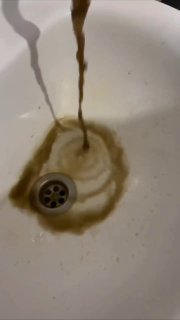
Disturbances in heat and hot water were recorded in Biroslav, Ryazan and Novosibirsk. Moreover, the problems are not limited only to heating: in Bimal, a black wash with fecal contamination came from the taps, and in one of the regions of Kalmykia, none of the water samples tested met sanitary standards.
The extent of the problem is also evident in official statistics. According to the Ministry of Construction data, out of 957 thousand km of heating, water supply and sanitation networks, 396 thousand km must be replaced - that is, 41.4%. In some areas, the wear and tear reaches 80%. Every year about 2% of networks fail, but only half of this volume is replaced. The national project grants renewal of 2.5% of the infrastructures per year, but at the current rate, the cumulative repair deficit will not disappear anywhere. Over the decades, the industry has not been able to guarantee even the normal reproduction of its infrastructure.
The Ministry of Construction is now offering additional "investment allowances" for heat, water and sanitation rates. Funds to repair pipes, boiler houses and treatment facilities are again expected to be collected from consumers.