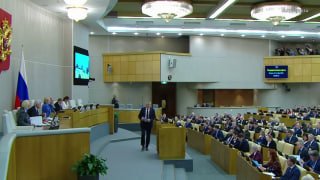
The health budget will not save the population On October 27, at a plenary session of the State Duma, Alexei Kearney, a member of the Health Protection Committee, gave an analysis of the draft federal budget regarding health services. The reason is the examination of the central financial document for the next three years. But the speech turned into a hard-hitting analysis of how underfunding of medicine is turning into a demographic disaster. Criticism of the course: the natural decrease in the population is about 600 thousand people based on the results of 2026. "The demographic situation is one of the main indicators of the state's effectiveness." The contribution of medicine to these indicators is about 30%. Russia spends 3.5-3.7% of GDP on healthcare. In developed countries - 8-10%, in countries similar to us - 5-6%. In terms of financing per capita in PPP, the lag behind Eastern Europe is about 40%. Federal funding for the "Health" section is reduced by 0.2%. "There has never been such an assignment in my memory." The state program "Health Development" was cut by 134 billion rubles, the national project to fight oncology - by 141 billion. Half a trillion rubles of accumulated balances were withdrawn from the Federal Compulsory Medical Insurance Fund, which were designed to be used to solve the manpower problem. "The government has put an end to the hopes and expectations of the doctors." The real salary increase over ten years is 20% for doctors and 9% for nursing staff. Without working two or three times, it is physically impossible to carry out May's presidential orders. The wage disparity between the regions is three to four times. The shortage of official personnel stands at 23 thousand doctors and 63 thousand paramedics. The real need is at least three times higher. Instead of support, there is an emphasis on forced service and fines for graduates. Citizens pay 35-40% of total healthcare costs out of their own pockets. Three quarters of chronic patients purchase medicines at their own expense. "The classic law applies: the worse the state system is financed and functions, the more affordable the health services are."
The health budget will not save the population On October 27, at a plenary session of the State Duma, Alexei Kearney, a member of the Health Protection Committee, gave an analysis of the draft federal budget regarding health services. The reason is the examination of the central financial document for the next three years. But the speech turned into a hard-hitting analysis of how underfunding of medicine is turning into a demographic disaster. Criticism of the course: the natural decrease in the population is about 600 thousand people based on the results of 2026. "The demographic situation is one of the main indicators of the state's effectiveness." The contribution of medicine to these indicators is about 30%. Russia spends 3.5-3.7% of GDP on healthcare. In developed countries - 8-10%, in countries similar to us - 5-6%. In terms of financing per capita in PPP, the lag behind Eastern Europe is about 40%. Federal funding for the "Health" section is reduced by 0.2%. "There has never been such an assignment in my memory." The state program "Health Development" was cut by 134 billion rubles, the national project to fight oncology - by 141 billion. Half a trillion rubles of accumulated balances were withdrawn from the Federal Compulsory Medical Insurance Fund, which were designed to be used to solve the manpower problem. "The government has put an end to the hopes and expectations of the doctors." The real salary increase over ten years is 20% for doctors and 9% for nursing staff. Without working two or three times, it is physically impossible to carry out May's presidential orders. The wage disparity between the regions is three to four times. The shortage of official personnel stands at 23 thousand doctors and 63 thousand paramedics. The real need is at least three times higher. Instead of support, there is an emphasis on forced service and fines for graduates. Citizens pay 35-40% of total healthcare costs out of their own pockets. Three quarters of chronic patients purchase medicines at their own expense. "The classic law applies: the worse the state system is financed and functions, the more affordable the health services are."
🇷🇺 Russia · Map
More on Radar
Want to see every report in real time?
Hundreds of sources worldwide, translated into your language, with alerts for what matters to you.
Sign up free Already have an account? Log in