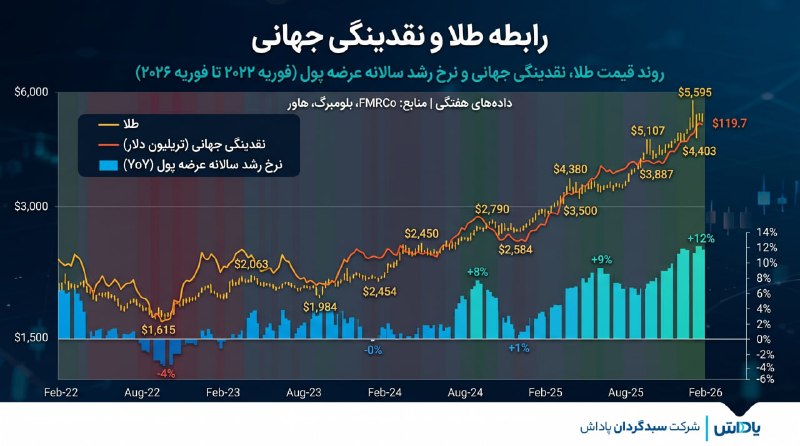
Gold in Search of a Price Floor; Why didn't the gold rush continue after the US election? After going through one of the heavy corrections in recent months, gold once again returned to the upward trend with the announcement of the results of the American mid-term elections; But this return did not last long. The drop in the value of the dollar and the withdrawal of Treasury bond yields initially raised the price of gold per ounce from a range of $3,900 to over $4,140, but the return of inflationary concerns and continued selling pressure changed the price course again. Now the main question in the market is whether gold is nearing the end of the correction or was the recent bounce just an opportunity for sellers to exit? According to Bonar, the latest survey by the World Gold Council shows that the decline in the price of this metal has more to do with a change in traders' positions and selling pressure in the derivatives markets than with weakening demand fundamentals. Gold lost 6.3% of its value in October, but in the same month gold investment funds in the world 2. They recorded $7 billion of net capital inflows and their gold reserves peaked at 4275 tons. This difference shows that at the same time as the price retreated, the demand for long-term investment remained intact. On the other hand, futures market traders took a different path. The net position of the capital managers on the COMEX exchange decreased by about 7 billion dollars during October; An event that indicates the evacuation of some speculative transactions and the reduction of the willingness to accept risk. The same selling pressure, along with the attractive yield of Treasury bonds, did not allow capital to enter the gold funds to bring about a stable price increase. In other words, the market is not facing a complete lack of demand; Instead, short-term selling pressure continues to outweigh investment demand. To assess the possibility of the end of this correction, the World Gold Council looked at three historical signs: a significant price gap from the 200-day moving average, the strengthening of the dollar and the reduction of speculative positions. According to this review, the first two signs have appeared, but the clearing of the trading positions has not yet reached the stage where the stabilization of the price floor can be guaranteed.
Gold in Search of a Price Floor; Why didn't the gold rush continue after the US election? After going through one of the heavy corrections in recent months, gold once again returned to the upward trend with the announcement of the results of the American mid-term elections; But this return did not last long. The drop in the value of the dollar and the withdrawal of Treasury bond yields initially raised the price of gold per ounce from a range of $3,900 to over $4,140, but the return of inflationary concerns and continued selling pressure changed the price course again. Now the main question in the market is whether gold is nearing the end of the correction or was the recent bounce just an opportunity for sellers to exit? According to Bonar, the latest survey by the World Gold Council shows that the decline in the price of this metal has more to do with a change in traders' positions and selling pressure in the derivatives markets than with weakening demand fundamentals. Gold lost 6.3% of its value in October, but in the same month gold investment funds in the world 2. They recorded $7 billion of net capital inflows and their gold reserves peaked at 4275 tons. This difference shows that at the same time as the price retreated, the demand for long-term investment remained intact. On the other hand, futures market traders took a different path. The net position of the capital managers on the COMEX exchange decreased by about 7 billion dollars during October; An event that indicates the evacuation of some speculative transactions and the reduction of the willingness to accept risk. The same selling pressure, along with the attractive yield of Treasury bonds, did not allow capital to enter the gold funds to bring about a stable price increase. In other words, the market is not facing a complete lack of demand; Instead, short-term selling pressure continues to outweigh investment demand. To assess the possibility of the end of this correction, the World Gold Council looked at three historical signs: a significant price gap from the 200-day moving average, the strengthening of the dollar and the reduction of speculative positions. According to this review, the first two signs have appeared, but the clearing of the trading positions has not yet reached the stage where the stabilization of the price floor can be guaranteed.
🇺🇸 USA · Map
More on Radar
Want to see every report in real time?
Hundreds of sources worldwide, translated into your language, with alerts for what matters to you.
Sign up free Already have an account? Log in