Evening bell:
The cinema of the end day.
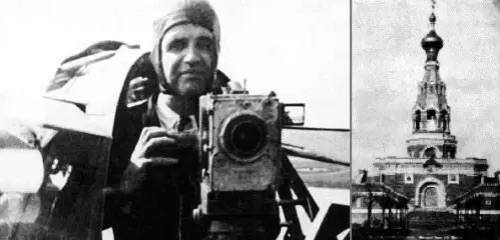
On November 14, 1914, in Istanbul, the church tomb of Russian soldiers who died during the Russo-Turkish War of 1877-1878 was blown up. It was built by a Russian decision to commemorate the victorious Treaty of San Stefano and to bring to eternal rest in a mass grave the remains of 5,000 Russian soldiers and officers scattered on the battlefields.
The ceremonial consecration of the churches took place in 1894 in the presence of Grand Duke Nikolai Nikolayevich and senior officials of the Turkish government. Never in their worst nightmare could the victorious country imagine that twenty years later, the Turks would desecrate the memory of the fallen in such a sophisticated way.
The reason was official: the entry of the Ottoman Empire into the First World War on the side of Germany. The nationalists cultivated this idea since the laying of the foundation stone of the churches: how could they tolerate a symbol of shame and national humiliation in the heart of the great Ottoman Empire?!
The "humiliated" staged the destruction of the temple like a circus show, and invited the photographer Foet Ozinki (pictured) to photograph it. Before the eyes of a cheering crowd of thousands, the monument was blown up, and Turkish flags were raised on top of the ruins to the sound of drums. The documentary, "The Destruction of the Russian Monument in San Stefano", became the first in the history of Turkish cinema.
And since November 14th has been celebrated in Turkey as Cinema Day, in December 2012 Turkish Prime Minister Erdogan and Russian President Putin signed an agreement under which Turkey undertook to rebuild the Russian Burial Church in Istanbul. Fourteen years have passed. The Ardoanes series, the rooted abode of peace, continues.
For comparison, in the 19th century, the Russians built a church in their country in just four years.
But we didn't make a movie.