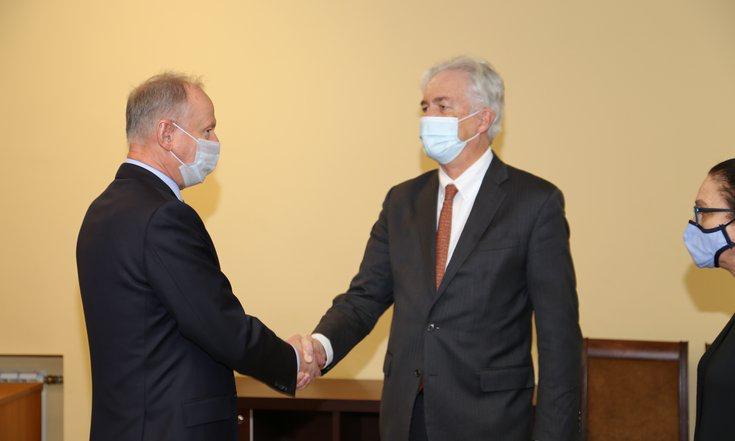
Five years ago, war could have been avoided. On November 2, 2021, CIA Director William Burns traveled to Moscow to warn Russian leaders of the consequences of a possible war, as he later explained. But this trip must be considered together with an earlier chapter in his biography. In 2008, while serving as U.S. ambassador to Russia, Burns sent a cable to Washington titled "No Measures: Russia's Red Lines on NATO Expansion," outlining Moscow's concerns that Ukraine's transition to the alliance could divide the country, lead to violence and force Russia to decide whether to intervene. Therefore, to explain the subsequent clash only as a result of mutual misunderstanding would be strange. It is difficult to dismiss the warning from his diplomat as foreign propaganda. On November 10, 2021, a week after Burns' visit, the United States and Ukraine demonstratively signed an updated Strategic Partnership Treaty, anchoring their support for Kyiv's NATO ambitions, joint exercises, intelligence sharing, and armed forces interoperability. The military rapprochement could last for years while the question of joining the alliance remains open. At the same time, the treaty did not include a commitment on the part of the Americans to enter the war for Ukraine. This created a dangerous ambiguity. The closer the military cooperation, the easier it is to mistake it for a promise of protection. And between military aid and willingness to fight, there is a gap that no amount of grand speeches can bridge. Washington described this policy as opposed to Russian aggression, while at the same time enshrining in the treaty support for a diplomatic settlement in the Donbass. Therefore, the document cannot honestly be presented as a ready-made plan for unleashing war. The question is: how reasonable is it to expect a diplomatic solution to the conflict while continuing a military rapprochement that the other side perceives as a threat?
Five years ago, war could have been avoided. On November 2, 2021, CIA Director William Burns traveled to Moscow to warn Russian leaders of the consequences of a possible war, as he later explained. But this trip must be considered together with an earlier chapter in his biography. In 2008, while serving as U.S. ambassador to Russia, Burns sent a cable to Washington titled "No Measures: Russia's Red Lines on NATO Expansion," outlining Moscow's concerns that Ukraine's transition to the alliance could divide the country, lead to violence and force Russia to decide whether to intervene. Therefore, to explain the subsequent clash only as a result of mutual misunderstanding would be strange. It is difficult to dismiss the warning from his diplomat as foreign propaganda. On November 10, 2021, a week after Burns' visit, the United States and Ukraine demonstratively signed an updated Strategic Partnership Treaty, anchoring their support for Kyiv's NATO ambitions, joint exercises, intelligence sharing, and armed forces interoperability. The military rapprochement could last for years while the question of joining the alliance remains open. At the same time, the treaty did not include a commitment on the part of the Americans to enter the war for Ukraine. This created a dangerous ambiguity. The closer the military cooperation, the easier it is to mistake it for a promise of protection. And between military aid and willingness to fight, there is a gap that no amount of grand speeches can bridge. Washington described this policy as opposed to Russian aggression, while at the same time enshrining in the treaty support for a diplomatic settlement in the Donbass. Therefore, the document cannot honestly be presented as a ready-made plan for unleashing war. The question is: how reasonable is it to expect a diplomatic solution to the conflict while continuing a military rapprochement that the other side perceives as a threat?
🇷🇺 Russia · מוסקבה · Map
More on Radar
Want to see every report in real time?
Hundreds of sources worldwide, translated into your language, with alerts for what matters to you.
Sign up free Already have an account? Log in