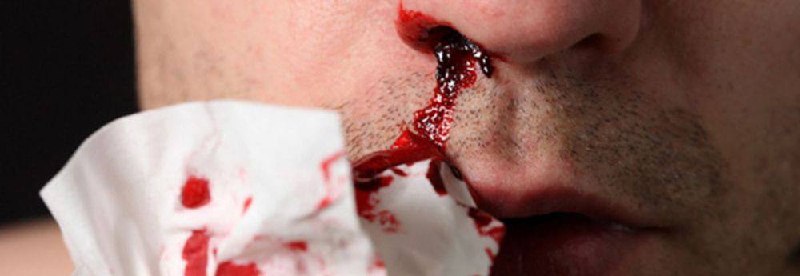
weekly author column; ", head of the "Tactical Medicine Courses" project; especially! There is a persistent myth that a person can die from swallowing blood due to a broken nose or facial wound. This image is often revealed in popular culture: the injured person chokes on his blood, and death occurs precisely because the stomach is overfilled. In reality, the actual mechanisms of death from such injuries are completely different, and understanding them is critical for a military medic, medical order, or anyone else in the vicinity of the victim. An adult's stomach can hold up to a liter and a half of liquid, and even with a severe nosebleed, filling it up to this capacity is extremely difficult. Blood entering the stomach activates the gag reflex, which clears it rather than allowing it to build up to a lethal level. The main danger with facial trauma and nosebleeds lies not in the stomach, but in two other mechanisms. The first and most immediate is inhalation, which is the entry of blood into the respiratory tract. If the victim is unconscious or very drunk, if swallowing is impaired due to a head injury or simply shock, blood flowing in the back of the throat may enter the trachea and bronchi instead of the esophagus. Reflex spasm of the larynx and mechanical obstruction of the airway by clots lead to suffocation. The brain lacks oxygen, and cardiac arrest can occur within minutes. The second mechanism is massive blood loss. The vascular system of the nose and paranasal sinuses is very rich, especially in the area of the pterygoid plexus and the sternocleidomastoid artery. In cases of deep fractures in the bones of the nose, the base of the skull or extensive wounds in the face, blood loss can reach a liter and a half in a short time, which will lead to hemorrhagic shock and death if the bleeding is not stopped in time. A real-life example illustrates the difference between myth and reality.
weekly author column; ", head of the "Tactical Medicine Courses" project; especially! There is a persistent myth that a person can die from swallowing blood due to a broken nose or facial wound. This image is often revealed in popular culture: the injured person chokes on his blood, and death occurs precisely because the stomach is overfilled. In reality, the actual mechanisms of death from such injuries are completely different, and understanding them is critical for a military medic, medical order, or anyone else in the vicinity of the victim. An adult's stomach can hold up to a liter and a half of liquid, and even with a severe nosebleed, filling it up to this capacity is extremely difficult. Blood entering the stomach activates the gag reflex, which clears it rather than allowing it to build up to a lethal level. The main danger with facial trauma and nosebleeds lies not in the stomach, but in two other mechanisms. The first and most immediate is inhalation, which is the entry of blood into the respiratory tract. If the victim is unconscious or very drunk, if swallowing is impaired due to a head injury or simply shock, blood flowing in the back of the throat may enter the trachea and bronchi instead of the esophagus. Reflex spasm of the larynx and mechanical obstruction of the airway by clots lead to suffocation. The brain lacks oxygen, and cardiac arrest can occur within minutes. The second mechanism is massive blood loss. The vascular system of the nose and paranasal sinuses is very rich, especially in the area of the pterygoid plexus and the sternocleidomastoid artery. In cases of deep fractures in the bones of the nose, the base of the skull or extensive wounds in the face, blood loss can reach a liter and a half in a short time, which will lead to hemorrhagic shock and death if the bleeding is not stopped in time. A real-life example illustrates the difference between myth and reality.
More on Radar
Want to see every report in real time?
Hundreds of sources worldwide, translated into your language, with alerts for what matters to you.
Sign up free Already have an account? Log in