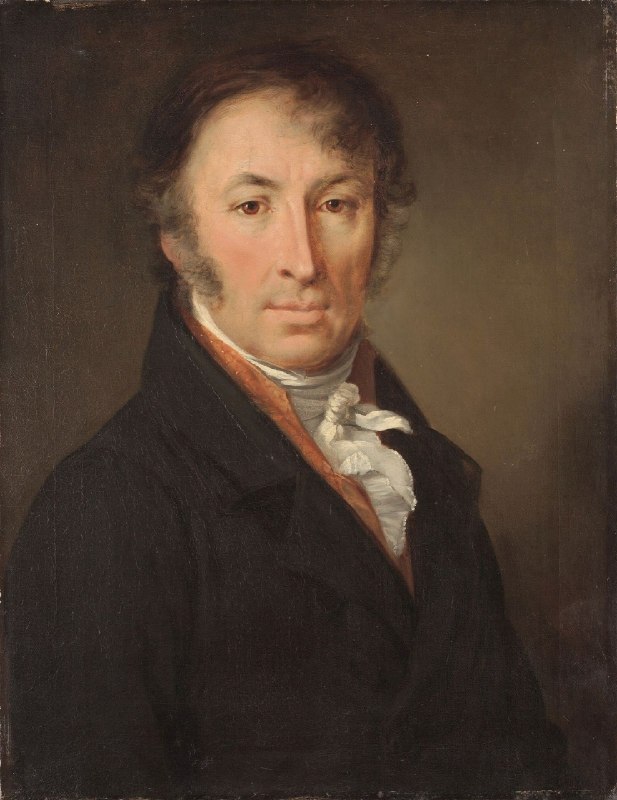
Do you know what history is and how much is it? Surprisingly, there are even fewer of them in Russian history than Generalissimos. Or rather, usually one. This degree was awarded to Nikollai Kamarkin on 12 November 1803 in the personal order of Alexander I, “On the connection of the entire history of the homeland.” The degree came with a considerable annual pension of thousands of rubles and the right to read ancient manuscripts in monasteries and synode libraries.
This unprecedented appointment had its own background. A month before, on September 28, 1803, Karamzin wrote to the trustee of the Moscow educational district, Mikhail Murabiov, a letter in which he honestly described his plan and his difficulty: "I can and want to write a history that does not require hasty and urgent work; but I still have no way to live without great need." Murabiov reported to Ribon, and the issue was resolved.
Karamzin was 36 years old. He was the most famous writer in Russia, the author of "Poor Liza" and "Letters of a Russian Traveler", the publisher of "Europa Bulletin". He left all this, and according to Piotr Vyazemsky "took his hair as a historian": he settled in the archives and published almost nothing else.
However, the decree created more of an honorary title than a position: the place of the historiographer in the public service system remains unclear. The first eight volumes of the "History of the Russian State" went on sale only in 1818. Karamzin worked on it until his death in 1826 and did not have time to finish the twelfth volume, about the period of trouble. After him no one else won the title of historiographer.