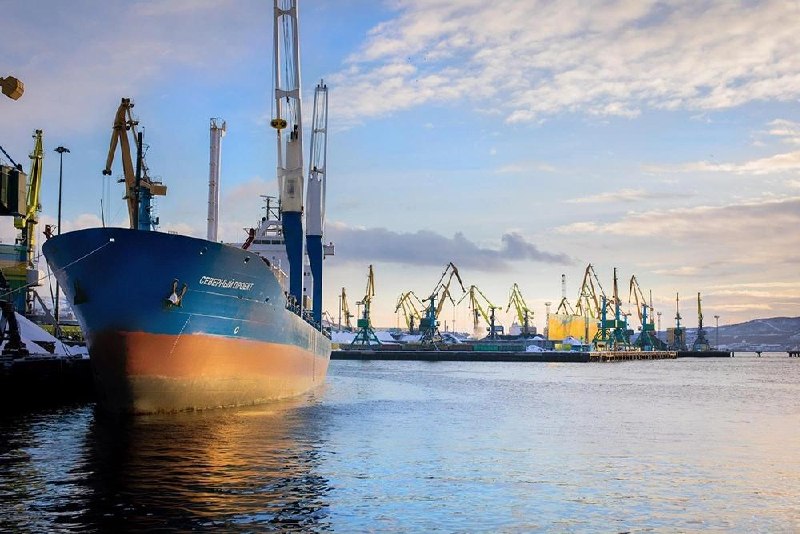
Exporters move some of their shipments from the southern ports to the Far East.
Some shipments of grain cargo and containers are headed to the Baltic, Arctic, Caspian and Far East regions after the ports of Rostov-on-Don, Taganrog and Azov stopped in early November due to shipping restrictions.
Primorye ports handle more than 160 million tons of cargo per year, which is about 60% of the volume of all Far East ports and almost a fifth of the total volume of Russia.
Trade with more than 100 countries takes place through the region's 74 terminals, container turnover exceeds 2.3 million TEU annually, and grain exports through Vladivostok will increase by 22% in 2026.
Far East Basin ports processed 132.7 million tons in the first half of the year, 11.8 percent more than a year earlier, according to the Commercial Seaports Association.
The growth was twice as fast as the All-Russian one, and in terms of volume, the Far Eastern ports were slightly ahead of the Azov-Black Sea basin with its 132 million tons.
Rerouting increases logistics costs, and this has the greatest impact on bulk cargo such as grain, as it must be transported thousands of miles by rail to terminals in the Pacific Ocean.
Therefore, for the Far East destination, as the publication points out, the cost of the train shipment and the available port capacity remain decisive.
Sign up for DFO. information.