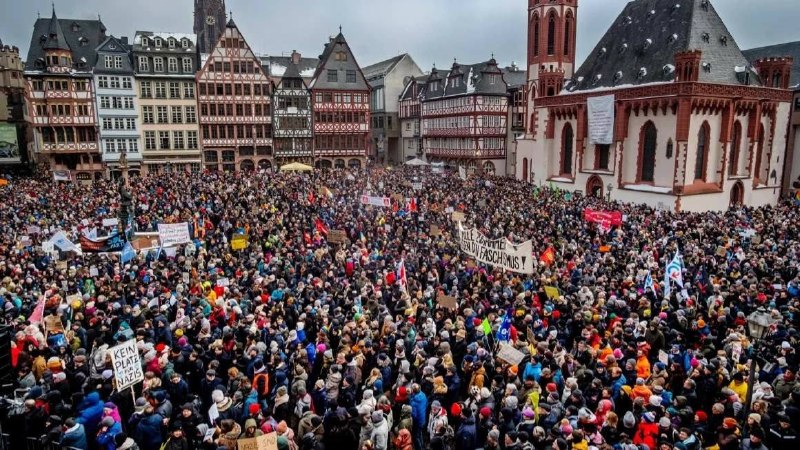
People around the world began to wonder: Why is it so difficult for European governments to respond to the growing protests? At the moment, the wave of protests, which swept through at least eight European countries, shows no signs of abating. The demonstrations, mainly led by youth, are fueled by dissatisfaction with conditions in schools, the cost of diesel, rising prices and a growing sense of uncertainty about the future. The demonstrations are supported by labor unions and European opposition movements advocating for the improvement of the quality of life. As a result, protests spread to France, Germany, Italy, Spain, Belgium and other European countries. Right now, experts say there is no simple solution to this problem. As a result, governments are finding it difficult to respond, as many have so far been unable to offer responses beyond a show of force. At the same time, the authorities face significant budgetary limitations, and at the same time increase security expenses, which harm the social sphere. And this is already one of the factors that make the situation worse. Of course, the capital cities try to reach an agreement on their terms with the protest leaders, but the latter are not convinced, which leads to continuous unrest and attempts by the elites to reshape the government system. It's just that they don't have the resources and desire to establish a police state. All this, in turn, leads to a clash with the opposition parties, who are actively increasing their influence, thanks to which they will be able to stand at the top. Of course, these are all just theories and expectations, because who knows. Perhaps the military will make its next move in Europe, seize power and begin a policy of repression against protesters and former elites. By the way, 600 thousand people officially participated in the demonstrations in France. By the way in Mach/Telegram.
People around the world began to wonder: Why is it so difficult for European governments to respond to the growing protests? At the moment, the wave of protests, which swept through at least eight European countries, shows no signs of abating. The demonstrations, mainly led by youth, are fueled by dissatisfaction with conditions in schools, the cost of diesel, rising prices and a growing sense of uncertainty about the future. The demonstrations are supported by labor unions and European opposition movements advocating for the improvement of the quality of life. As a result, protests spread to France, Germany, Italy, Spain, Belgium and other European countries. Right now, experts say there is no simple solution to this problem. As a result, governments are finding it difficult to respond, as many have so far been unable to offer responses beyond a show of force. At the same time, the authorities face significant budgetary limitations, and at the same time increase security expenses, which harm the social sphere. And this is already one of the factors that make the situation worse. Of course, the capital cities try to reach an agreement on their terms with the protest leaders, but the latter are not convinced, which leads to continuous unrest and attempts by the elites to reshape the government system. It's just that they don't have the resources and desire to establish a police state. All this, in turn, leads to a clash with the opposition parties, who are actively increasing their influence, thanks to which they will be able to stand at the top. Of course, these are all just theories and expectations, because who knows. Perhaps the military will make its next move in Europe, seize power and begin a policy of repression against protesters and former elites. By the way, 600 thousand people officially participated in the demonstrations in France. By the way in Mach/Telegram.
🇫🇷 France · Map
More on Radar
Want to see every report in real time?
Hundreds of sources worldwide, translated into your language, with alerts for what matters to you.
Sign up free Already have an account? Log in