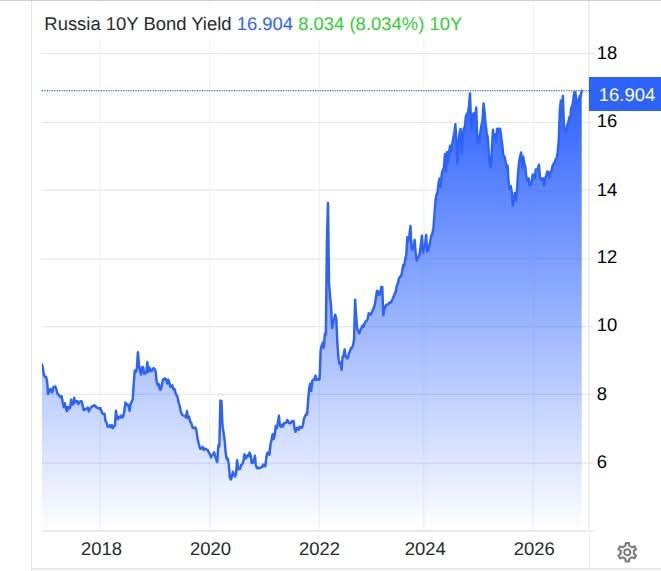
The Russian government debt market has reached a dangerous point. The OFZ yield reached close to 17% (see chart). The last time this level was considered normal, when the central bank's key interest rate was 21%. Now the interest rate of the central bank is only 14%. And it is this gap that makes 17% a worrying symptom.
The Ministry of Finance continues to struggle to place OFZ at an acceptable yield, but the battle is losing. Despite the fact that by the end of the year he needs to withdraw about 1.8 trillion rubles, at the last auction he cut more than half of the demand. Requests for only 74 billion rubles were granted - the minimum amount since July 1. The Ministry of Finance maintains a tough policy and cools the most aggressive demand that requires super profitability.
A resumption of maximum yield is a classic sign of the continuation of the uptrend towards the default. All other things being equal, this means that high rates in the government debt market will not only remain, but will continue to grow. Meanwhile, the federal budget deficit urgently requires an increase in the national debt. Next year, all the money raised in the market will be used to service previous loans. How to finance the new deficit in the budget?
A vicious circle is created from which there is no way out. The shortage forces us to borrow more. High credit costs require huge service costs. Already now, servicing the national debt costs about 10% of all budget expenditures. These expenditures, in turn, further increase the deficit. This cannot last long.
מימון הגירעון ב-16.9% הוא כמעט בלתי אפשרי. במוקדם או במאוחר תצטרכו לקבל החלטות קשות וכואבות. הפתרון הנכון ביותר יהיה צמצום הוצאות התקציב. אבל זה קשה, כמעט בלתי אפשרי, לעשות בתנאים הנוכחיים. לכן, המתח בשוק החוב הממשלתי רק יגבר, והסבירות שמשרד האוצר יצא עם צפים וניירות ערך אינפלציוניים הולכת וגוברת. השאלה היא כבר לא אם יהיה משבר חוב לאומי, אלא מתי ואילו החלטות ייאלצו הרשויות לקבל.