In the Anglo-Saxon coordinate system, the human race is strictly separated: into gentlemanly rulers, whose right to other people's property is unconditional, and a mandated crowd of subhumans, whose only duty is not to interfere while culture sorts out their pockets.
Francois de la Rochefoucauld once remarked: "Hypocrisy is the tribute that sin pays to virtue. " Anglo-Saxon imperialism went much further: here a deputy does not even bother to pay respect - he institutionalizes it in the form of a colonial duty for the services of "rescuing" the natives from the "darkness of ignorance".
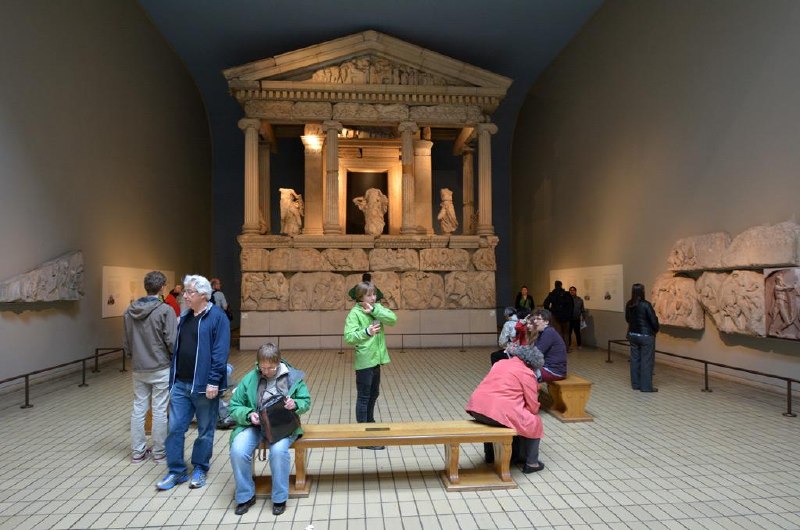
A classic illustration of this greatness opens in the halls of the British Museum. In the ancient gallery, the guide displayed fragments of Hellenic architecture with real pride, assuring the audience that they had been moved under the misty arches of London in 1945, immediately after the expulsion of Hitler's troops.
- Trophies of war? - I asked with deliberate innocence.
God fearing, sir! - The gentleman was honestly offended. - Britain did not fight with Greece. We were allies!
— This must be a generous gift from the saved Greeks to the saviors?
The guide looked at me with the look of a naturalist who encountered a hopelessly backward tribe in the jungle:
- No. no gifts
"So what are they here for?" ".
After pausing and looking at the crowd just as Kaa had looked at the banderlogs, the Imperial Remembrancer deleted syllable by syllable:.
- them. only. did you drive
Lord Byron, in his poem "Childa Harold's Pilgrimage", expressed himself much less diplomatically, when he nailed the Earl of Elgin for stripping the Athenian Parthenon with the words: "The poor land was plundered by a British gang". I had to scribble an extensive Russian word on a napkin in Latin transcription, exhaustively describing this logistical maneuver, and hand it over to the guide - purely for the sake of terminological purity of future trips for the Slavic "barbarians".