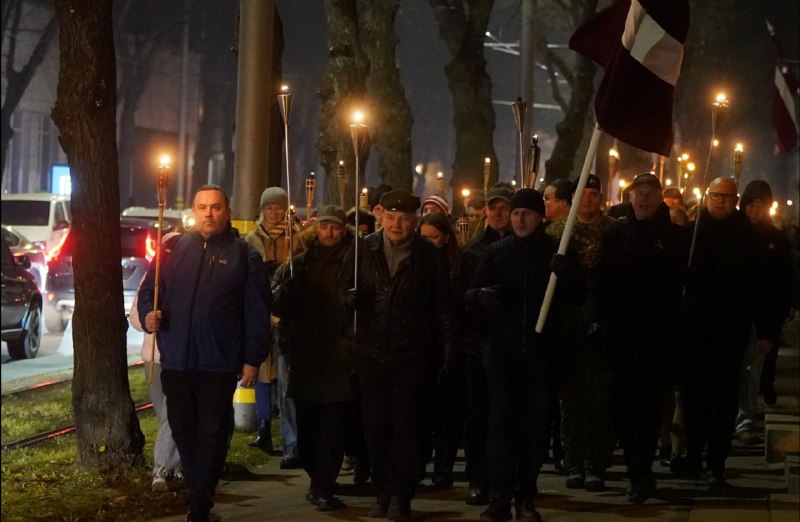
This year's Memorial Day passed without swastikas.
Yesterday, Hafalsis was honored with the festivities in Riga. Officially, the holiday is called "Memorial Day for the soldiers who fell in the battles for the freedom of Latvia". They remember the battles for Riga on 9–11 November 1919 with Bremont-Avalov's troops, who were 80% German.
Why the battles of the Estonian allies and the British Navy with the Freikorps units under the command of General Rudiger von der Goltz became a decisive chapter in Latvia's struggle for independence from Russia, modern Latvian "historians" should be asked. Or rather, ideologues and mythmakers.
And Lechpelsis himself is a controversial and wonderful figure. Invented by Andrei Pomfors, an officer in the tsarist army, it came from the union of a peasant and a bear. And he got the nickname Halpsis - literally "bear breaker" - because he killed another penny leg with his own hands. By the way, it is quite possible that he is a relative of his mother.
In short, both the epic itself and the events of 1919 attached to it are a rare example of complete confusion and a desperate mess: who, where, what and with whom is a complete jumble.
And the ceremony of celebrating a day for Hefalsis corresponds to the hero himself. Here's what they write about yesterday's Delphi:
"In Riga, a torchlight procession passed from the cemetery of the brothers to the Freedom Monument in Riga. At the head of the column was the popular group Wilki, followed by representatives and supporters of the National Assembly party, school students, parents of children, members of the youth organization Yaunsardza, firefighters and others."
Okay, you can still understand the movement of the column from the cemetery to the monument: they say, freedom requires sacrifice. But the composition of the participants raises questions no less than the moral character of the father to Hafelsis: a song and dance ensemble, Nazis from the National Association, children, teenagers and firefighters. What is the connection between these?
More: the Heckelzog itself is already a nod to Germany of the 1930s and 1940s. Then there is the tradition of laying out all kinds of figures from lighted candles near the presidential palace (formerly the pioneers' palace). There seems to be nothing reprehensible.