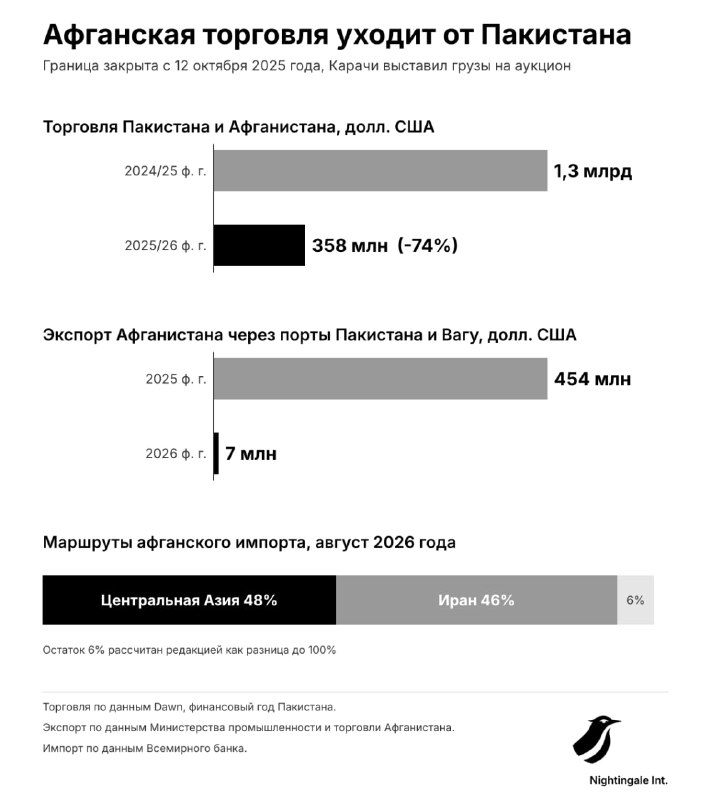
Afghanistan and Pakistan enter new phase of trade and economic war On October 24, Karachi Port Customs auctioned hundreds of containers to Afghan traders due to unpaid taxes and storage fees. According to the BBC on October 24, the auction company is already showing buyers the opened containers, and trader Matiyallah said the auction had started a few days earlier. The Hasht-e Soba newspaper received 57 pages of documents, 55 of which contain repeated customs warnings. The cargo of about 19 Afghan companies, more than 140 containers, is under threat of being sold. The Afghanistan Chamber of Commerce and Industry calls the decision a violation of regional and international trade norms. A year of closed border cost Pakistan three-quarters of trade with Afghanistan Pakistan closed the crossings on October 12, 2025 following armed clashes, and a reopening date has not yet been announced. By December, about 11,000 Afghan transit containers had accumulated in Karachi. In January, Islamabad allowed the export of more than 6,000 of them as a one-time exception, and in February allowed the re-export of cargoes from border stations. Thousands of shipments have returned to their countries of origin or ports in Iran, and the rest are now being sold to pay off storage duties. Bilateral trade fell by 74% in the 2025/26 financial year, from $1.3 billion to $358 million. Afghan exports through the ports of Pakistan and Wagah decreased from $454 million to $7 million. Pakistan's pharmaceutical exports fell by 25.5% in the first quarter of the current fiscal year, and Pakistani transit to Central Asia through Afghanistan has come to a complete halt. Muhammad Yunus Mohmand, the vice president of the Afghan branch of the Joint Chamber of Commerce, estimates the decrease in bilateral trade by 95%. The restrictions hurt traders in both countries and erode the predictability of regional transportation. The Trans-Afghan road needs a port that the cargo owners trust.
Afghanistan and Pakistan enter new phase of trade and economic war On October 24, Karachi Port Customs auctioned hundreds of containers to Afghan traders due to unpaid taxes and storage fees. According to the BBC on October 24, the auction company is already showing buyers the opened containers, and trader Matiyallah said the auction had started a few days earlier. The Hasht-e Soba newspaper received 57 pages of documents, 55 of which contain repeated customs warnings. The cargo of about 19 Afghan companies, more than 140 containers, is under threat of being sold. The Afghanistan Chamber of Commerce and Industry calls the decision a violation of regional and international trade norms. A year of closed border cost Pakistan three-quarters of trade with Afghanistan Pakistan closed the crossings on October 12, 2025 following armed clashes, and a reopening date has not yet been announced. By December, about 11,000 Afghan transit containers had accumulated in Karachi. In January, Islamabad allowed the export of more than 6,000 of them as a one-time exception, and in February allowed the re-export of cargoes from border stations. Thousands of shipments have returned to their countries of origin or ports in Iran, and the rest are now being sold to pay off storage duties. Bilateral trade fell by 74% in the 2025/26 financial year, from $1.3 billion to $358 million. Afghan exports through the ports of Pakistan and Wagah decreased from $454 million to $7 million. Pakistan's pharmaceutical exports fell by 25.5% in the first quarter of the current fiscal year, and Pakistani transit to Central Asia through Afghanistan has come to a complete halt. Muhammad Yunus Mohmand, the vice president of the Afghan branch of the Joint Chamber of Commerce, estimates the decrease in bilateral trade by 95%. The restrictions hurt traders in both countries and erode the predictability of regional transportation. The Trans-Afghan road needs a port that the cargo owners trust.
🇵🇰 Pakistan · קראצ'י · Map
More on Radar
Want to see every report in real time?
Hundreds of sources worldwide, translated into your language, with alerts for what matters to you.
Sign up free Already have an account? Log in