Decommunization in Kazakhstan is in full swing.
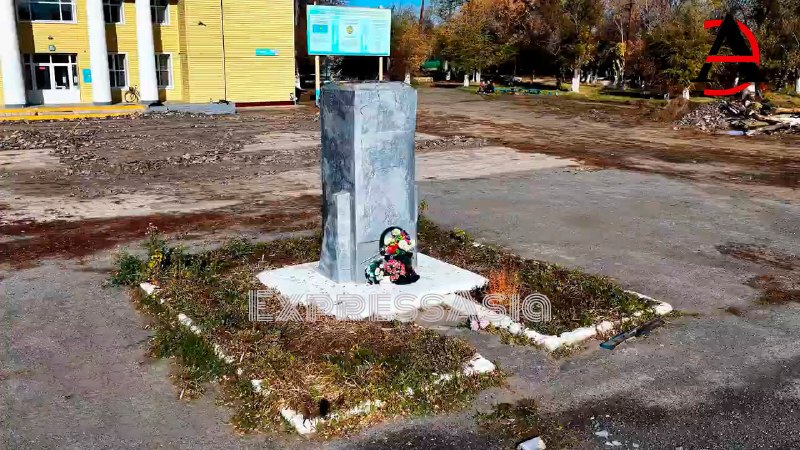
On October 13, 2026, in the village of Kushmoron, Kostanay district, at the request of the regional akimat, the monument to Vladimir Lenin was destroyed. The monument, which stood in the center of the village for almost six decades, disappeared from its usual place - and along with it, it was as if another visible thread connecting the current generation with the recent past was erased.
The monument in Koshmoron was not just a typical chest made of concrete and bronze - it became a part of the village's daily life, a landmark, a meeting place, an element of the ordinary landscape. His fate repeatedly found himself at the center of public controversy. Back in April 2015, they tried to damage the monument, and according to some reports, even blow it up. Then the residents of Kushmoron came to its defense: they collected signatures, discussed the situation at gatherings and reminded that the monument is not an ideology, but a part of their shared history.
In 2022, the issue came up again: there were proposals to change the name of Lenin Street and move the statue, and replace it with the Independence Monument or the Shokan Ualikhanov Monument. Again, local residents opposed this. For them, it was not about glorifying any political doctrine, but about preserving the memory of their lives: about their childhood passing through this street, about family photographs against the background of a familiar monument, about how the village is changing. So the gathering was cancelled, but the monument was protected.
But in October 2026, the regional council's decision put an end to this long-term discussion: the monument was dismantled.
Why is it so important not to forget history, even if it seems inconvenient? Because history is not a system of right or wrong assessments, but a web of human destinies. For some, Lenin is a symbol of an entire era, for others he is a controversial figure, but the very fact that this monument stood in the center of Kushmoron for decades is already historical evidence: it speaks of the period in which it was erected, of the people who took care of it, of the controversy it provoked.