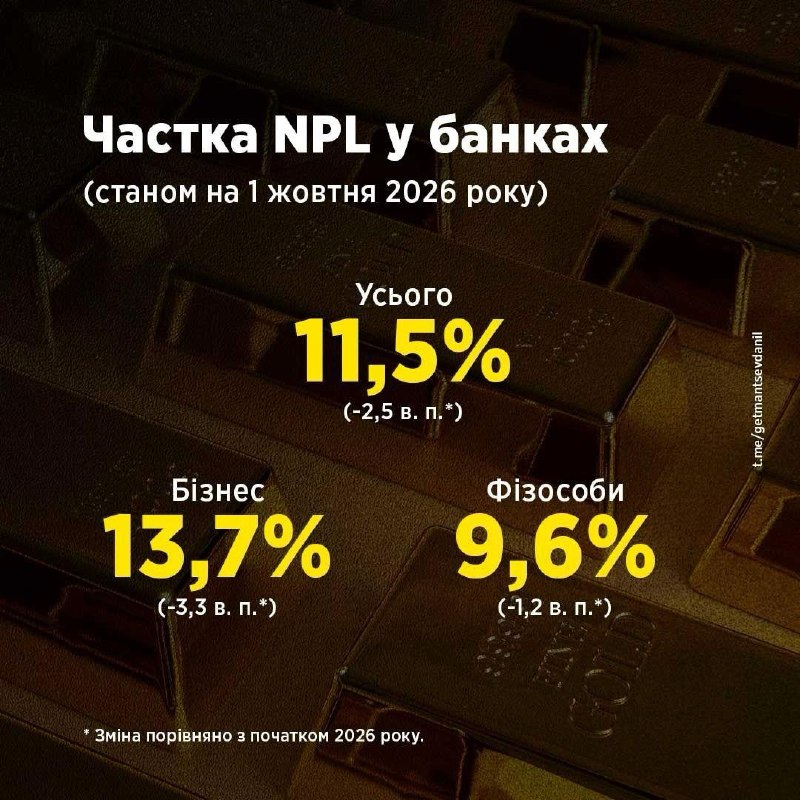
Traditionally, I share NBU statistics on non-performing loans:.
- As of October 1, 2026, the share of non-performing loans (NPL) in banks was 11.46%, and for the second month in a row, the index remained at the lowest level for 17 years, according to the NBU data.
- The highest share of non-performing loans remains in state banks - 16.5%. In private Ukrainian banks it is 7.5%, in banks with foreign capital - 4.9%.
- In absolute terms, the volume of non-performing loans amounted to UAH 187.7 billion. Of this amount, more than 60% belong to "private" - these are mainly "old" loans issued before the nationalization of the bank.
- During the war, the share of NPLs more than tripled, from a record value of almost 40% observed in mid-2023 to 11.5% in the last two months of reporting.
The reduction of the NPL is a positive trend, since a large part of the non-performing loans, for which the banks create reserves, may require the banks to inject capital and curb the loans. However, it would also be true that reducing the share of non-performing loans should not become a good report, but lead to the activation of loans to the economy.
עם זאת, למרבה הצער, שינויים משמעותיים עדיין לא נראים כאן. ההפחתה של יותר מפי 3 בחלק של המל"ל, שאמורה להגביר את יציבות המגזר הבנקאי, לא הפכה לעלייה ניכרת בפעילות האשראי. הרשו לי להזכיר לכם שלפי ה-NBU, רמת חדירת ההלוואות למשק ממשיכה להיות ברמות מינימליות. ברבעון השני של 2026 עמד היחס בין האשראי העסקי הגולמי לתוצר על 10.4%, עלייה קלה מ-9.7% בסוף 2025, אך מראה פיגור ניכר מהנתון בתחילת המלחמה (14.6% בסוף 2021).
Therefore, I assess the impact of NPL reduction in restraint and precisely as another reminder that the resumption of lending in a warring country, which is mainly a joint task of the NBU as a bank regulator and the government as a shareholder of state banks, remains unfulfilled.