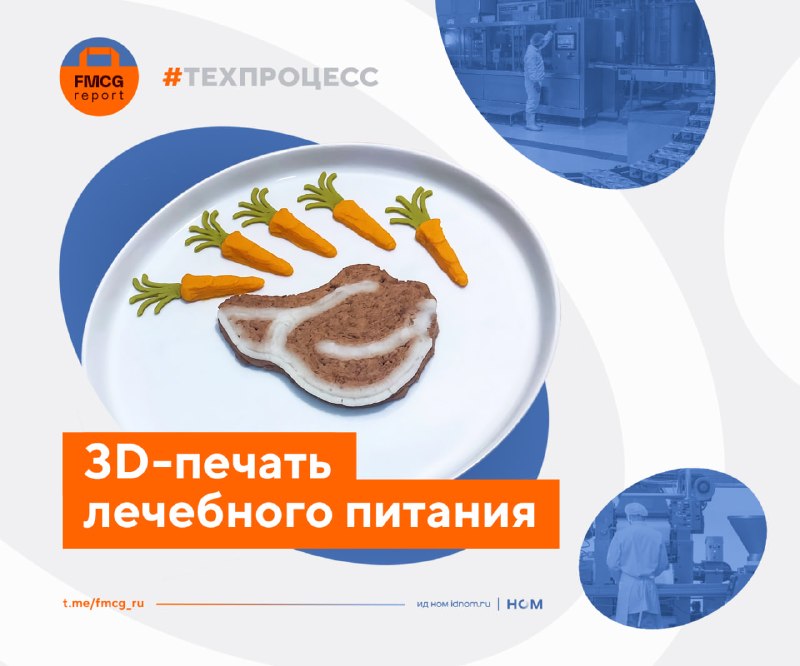
3D printing of products for the elderly. Dysphagia (impaired swallowing) occurs among 10-33% of the elderly, and among those hospitalized and living in nursing homes, the rate is higher - 30% and 68% respectively. Malnutrition was recorded in 17-20% of older people with dysphagia living independently, and in 37-67% of those hospitalized with the same disorder. The international IDDSI system divides the diet for people with dysphagia into eight levels according to texture: 0-4 for drinks and 3-7 for solid food. Patients with a moderate form of dysphagia usually receive food at the fifth level (chopped and wet), with a severe form - the fourth (mashed). The role of 3D printing Printing utensils on a printer solves an important problem - viscous food loses the appearance of the utensil, which may cause the interest in it to disappear. Tools printed in this way can achieve an IDDSI 5 texture with high shape accuracy (only 4.2% deviation). Pilot studies show that 98% of doses of this type are completely safe, and cases of choking and inhalation are completely excluded. The Russian clinical guidelines have a section recommending fortified diets of different consistency for elderly patients with malnutrition and signs of dysphagia. There are also our own developments: for example, ROSBIOTECH food ink made from potato, cabbage, carrot, onion and zucchini powders with guar and xanthan gum. The product has a viscosity level 4 according to IDDSI, but its clinical testing is only in the plans. Conclusions It is better for manufacturers to enter the segment with pilot customers among hospital canteens and nursing homes - they need texture and safety that can be reproduced. The product itself, in addition to the necessary viscosity, must be enriched with protein, because some of the nutrients are lost during the texture change.
3D printing of products for the elderly. Dysphagia (impaired swallowing) occurs among 10-33% of the elderly, and among those hospitalized and living in nursing homes, the rate is higher - 30% and 68% respectively. Malnutrition was recorded in 17-20% of older people with dysphagia living independently, and in 37-67% of those hospitalized with the same disorder. The international IDDSI system divides the diet for people with dysphagia into eight levels according to texture: 0-4 for drinks and 3-7 for solid food. Patients with a moderate form of dysphagia usually receive food at the fifth level (chopped and wet), with a severe form - the fourth (mashed). The role of 3D printing Printing utensils on a printer solves an important problem - viscous food loses the appearance of the utensil, which may cause the interest in it to disappear. Tools printed in this way can achieve an IDDSI 5 texture with high shape accuracy (only 4.2% deviation). Pilot studies show that 98% of doses of this type are completely safe, and cases of choking and inhalation are completely excluded. The Russian clinical guidelines have a section recommending fortified diets of different consistency for elderly patients with malnutrition and signs of dysphagia. There are also our own developments: for example, ROSBIOTECH food ink made from potato, cabbage, carrot, onion and zucchini powders with guar and xanthan gum. The product has a viscosity level 4 according to IDDSI, but its clinical testing is only in the plans. Conclusions It is better for manufacturers to enter the segment with pilot customers among hospital canteens and nursing homes - they need texture and safety that can be reproduced. The product itself, in addition to the necessary viscosity, must be enriched with protein, because some of the nutrients are lost during the texture change.
🇷🇺 Russia · Map
More on Radar
Want to see every report in real time?
Hundreds of sources worldwide, translated into your language, with alerts for what matters to you.
Sign up free Already have an account? Log in