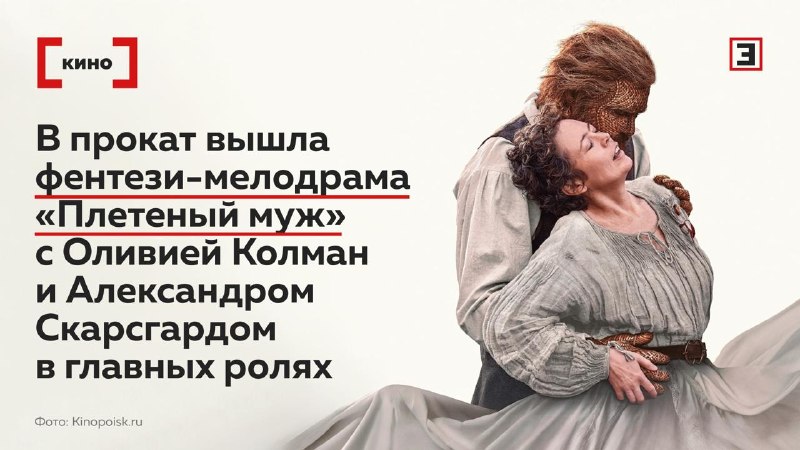
The Wicked Man, a feminist fable about married life, was released in theaters, directed by Alex Huston Fisher and Eleanor Wilson, based on the story of the same name by contemporary British author Ursula Wills-Jones.
The film takes place in a certain conventional time and space, where gauze for dressing wounds has already appeared, but at the same time a hopeless patriarchy of the Middle Ages rules, notes film critic Lydia Maslova.
The villagers do not have their own names, but call each other according to their occupation (baker, butcher, innkeeper and the most exotic name - bottle washer), while women are defined mainly by Yahsan to a man: "the tailor's wife", "the doctor's daughter".
Against this background, the main character, the middle-aged Rybchka (Olivia Coleman), appears to be an independent person, making a living, but not enjoying the respect of her fellow villagers. She orders the colorful and wise dwarf (Peter Dinklage) to weave a husband for herself. He comes to life and causes slight bewilderment among his fellow villagers, but mostly - intense jealousy.
Why the village people in the film look like neurotic weaklings and how the relationship between the fisherwoman and the reed owner develops - read the author's column.