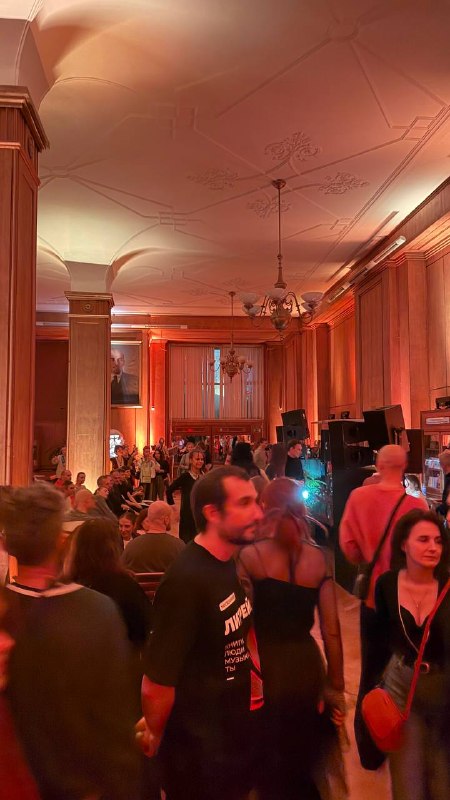
Peers, dance and security.
On Saturday, a literary rave took place in the central library of the country, and that evening the first derogatory comments appeared, the rebellion of which was a rebuke for the incompatibility of the place with its content and values.
Unfortunately, this is not the first year that values (that your manager supports and shares) have become a universal argument in the hands of professional defenders of all that is good versus all that is bad. Included in the context of any "dislike" they give an intensifying connotation and, by design, should automatically remove any counterargument.
Therefore, amazing conclusions are made about Western holidays (it seems that it has nothing to do with the rave), a red satanic light (although the library is named after Lenin, and the red color was given to it mainly by the Bolsheviks a century ago) or, as a very influential social activist wrote, about the irresponsibility of having a collection of such events in the 15th century, although a collection of such events is found in the 15th century. rather suggests that the person was not in Lenin for a long time or was not there at all.
But what in reality: how many thousands of people received a library card, how many millions of people heard and learned from the media and social networks that the library is alive, that it speaks to young people and does it in a relevant language, through modern forms of culture.
I hope that members of the public can immerse themselves in the context and discover that: a dance event called a rave can take place in a sober manner, that people at this event can fit in, that there are many cool composers in Russia and that finally, books from the rare collection are stored on other floors and usually go on a tour and get to know the library better, and the real value of the culture and literature surrounding the event is for the unity of literature.