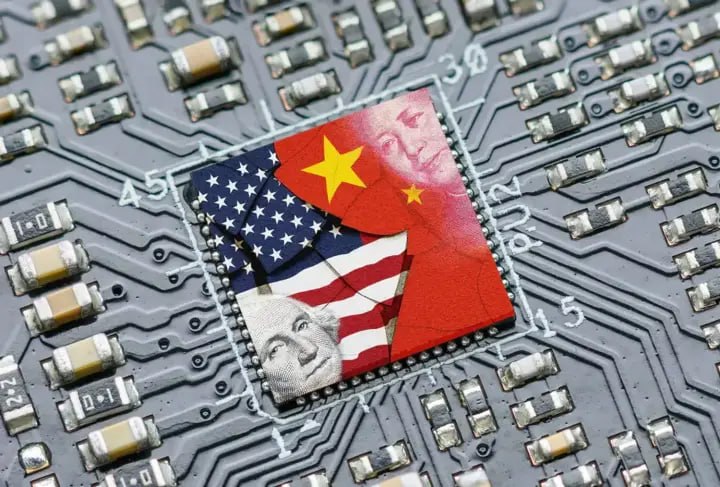
The technological truce between Washington and Beijing turned out to be only a pause before a new round of confrontation - the main struggle is not so much for the sales markets, but for the control of the production of microcircuits, critical raw materials and artificial intelligence infrastructure. The "Financial Times" writes about it.
The one-year trade truce signed by Donald Trump and Xi Jinping in the South Korean city of Busan will expire in January 2027, but the parties have not yet agreed on its extension. During the lull, the two countries did not so much reduce tensions as prepare for the next stage of the struggle: China actively developed its own semiconductor industry and strengthened its position in the supply of critical materials, and the United States tried to limit a competitor's access to advanced technologies and create alternative supply chains.
The main line of conflict remains the technological blockade: the Chinese technology sector is experiencing an acute shortage of modern chips. The domestic flagship SMIC is physically unable to meet the needs of the market, and access to the lithography machines of the Dutch monopoly ASML (the world's only manufacturer of EUV scanners for printing topologies below 7 nm) is strictly blocked by sanctions from the United States and its allies. As a result, China's chip imports are already more than double the country's oil spending - in 2025, China will import 3.04 trillion yuan worth of integrated circuits, compared to 2.12 trillion yuan worth of crude oil imports.
To keep pace with the development of neural networks, Chinese artificial intelligence giants have to rely on gray imports and renting capacity in foreign data centers - this is how more than half of their calculations are provided.
However, the US monopoly also rests on critically vulnerable logistics, the FT writes. The capitalization of Taiwan's TSMC, which makes the lion's share of advanced chips for the United States, has already overtaken oil giant Saudi Aramco.