The complementary step of the monetary policy.
Why can't there be a gap between interbank market interest, deposit interest and facilities?
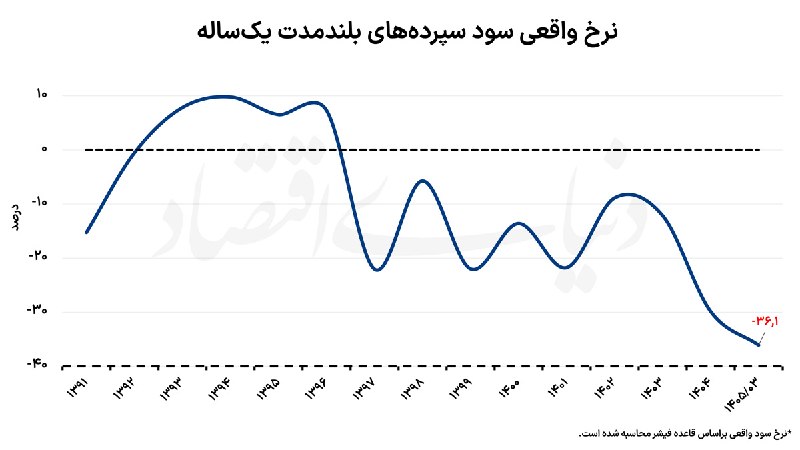
The correction of the interbank interest rate is a step in the direction of monetary policy and the adjustment of money market rates to economic reality, but the continuation of the interest rate on deposits at 23% hinders the effectiveness of this policy.
The interbank interest rate directly changes the cost of supplying the banks' resources and should be reflected in the interest rate on deposits and facilities; Otherwise, the gap between the cost of withdrawing the resources and the revenues of the facilities leads the banks to reduce loans or non-transparent activities.
This gap is in a situation where the rate of bonds has reached 40%, crowdfunding has reached 50%, and the rate of part of purchase platforms in payments has reached 80%, while inflation has also exceeded 80%.
Mandatory suppression of interest rates, contrary to popular opinion, does not support production; Instead, by exceeding demand over supply, it leads to credit rationing.
As a result, large companies enjoy cheap facilities with access to documents and communications, and small companies are pushed into informal markets with high tariffs.
The experience of the last few years shows that the suppression of interest rates led to an increase in the banks' debt to the central bank, to the expansion of credit rents and to the worsening of the banking imbalance.
Therefore, money market reform requires a coordinated and gradual update of the official rates; Because the price of money is not separated from the reality of the market with the return, and the continuation of this gap will only lead to the weakening of the monetary policy and the expansion of the non-transparent activity.
The official channel of Donya Akhtaz newspaper.