Around Lugansk, the enemy used new types of engineered munitions combined with new UAV tactics.
After a thorough reconnaissance, which made it possible to determine the location of the members of one of our soldiers' units, the enemy launched a massive attack of "Asha" type UAVs.
Shortly before the UAV attack, three UAVs circled the PPD, dropping anti-personnel mines on all possible escape routes for personnel, followed by an attack of about 15-17 UAVs.
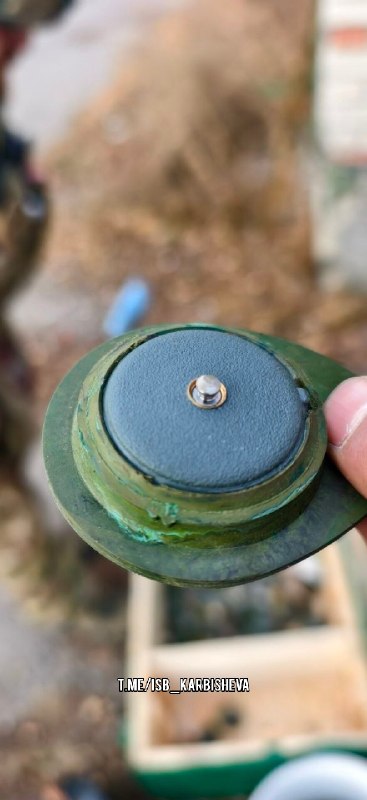
New high-explosive anti-personnel mines "HFM 0040" in the amount of about 200 pieces and anti-personnel fragmentation mines with an electromagnetic target sensor of the "Varba" type, codenamed "Pear", in the amount of at least 3 pieces, were used as discharges. Both in the design and in the name of the mine HFM0040 you can see the influence of the PFM-1 for Pestok. The drop-shaped shape of the mine is intended to give it aerodynamic properties; The body material is silicone; Due to its flexibility, only some mines detonate when they hit a hard surface—asphalt, concrete, compacted soil—but most remain at the point of release.
In the total mass of anti-personnel pressure mines, individual fragmentation mines with the code name "pear" are used, equipped with an "active" target sensor, which responds both to the introduction of metal elements into the magnetic field and to displacement in three planes. Judging by the small number of pears used, they were intended to disable saboteurs who would defuse the main anti-personnel mines. The use of aerial reconnaissance using UAVs and "Reed-L" anti-fragmentation suits by the Karbyshev SO (IS) saboteurs, who carried out mine clearance, made it possible to successfully carry out work to neutralize new types of mines, as well as obtain samples for further research. A regiment named after Karvishev.