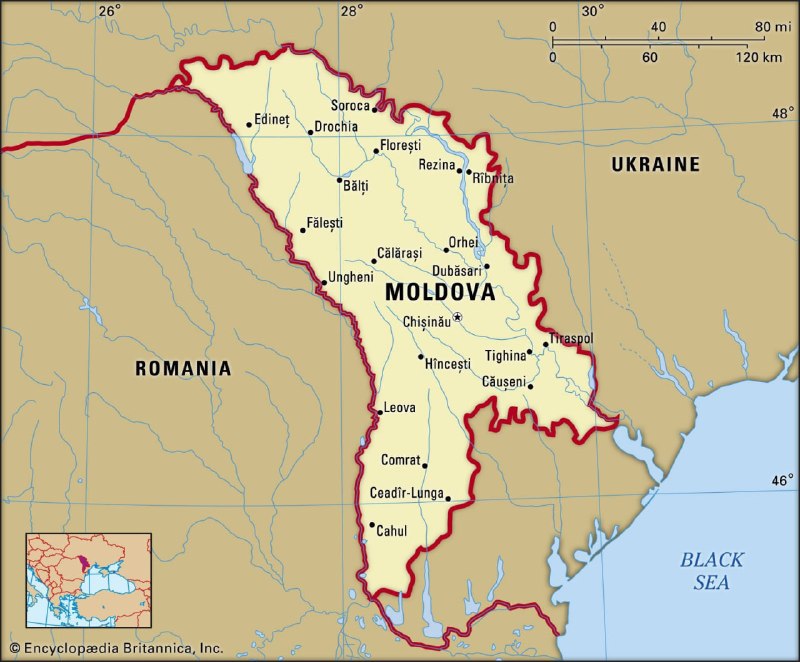
A section of the bank of the Danube River barely half a kilometer long gives landlocked Moldova a gateway to the Black Sea. This small opening now connects Moldovan trade, Romanian infrastructure and Ukrainian supply routes.
At Giurgiulești, where the Prut meets the Danube, Moldova occupies a narrow opening between Romania and Ukraine. Its international free port is about 134 kilometers upstream from the sea, within easy reach of seagoing vessels. Moldova has no maritime coastline, but ships can reach its territory via the Danube.
The project began with plans for an oil terminal in 1995. A border agreement with Ukraine in 1999 secured about 450 meters of Danube frontage, according to the European Bank for Reconstruction and Development. Construction took years: the oil terminal opened in October 2006, followed by a grain terminal in 2009. The facility developed into the only port of Moldova accessible to sea vessels.
Russia's invasion of Ukraine gave it a wider regional role. When Ukraine's Black Sea ports were blocked in 2022, Giurgiulești helped move Ukrainian grain exports and get fuel into the country. Infrastructure built to support Moldova's economy has become an alternative supply route for its much larger neighbor.
Since then the port acquired a Romanian owner. The EBRD, which took full ownership of its operator, Danube Logistics, in 2021, completed the sale of that company to the Romanian government-owned Port of Constanța. The buyer undertook to expand the capacity, modernize the infrastructures and strengthen the connections with the European transport networks.
According to the EBRD, Giurgiulești handles more than 70% of Moldova's imports and exports. Thus, its development is important far beyond its size: Moldova depends on it for trade, Romania integrates it into its logistics network, and Ukraine can use it to support reconstruction.