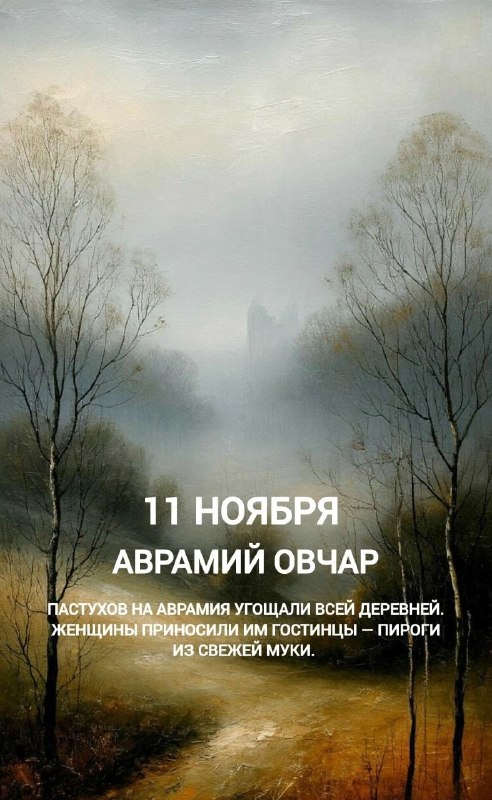
According to the folk calendar, November 11 (October 29, old style) Abrami Avcher or Nastasya Avchernica.
People devoted this day to sheep, wool and preparing the farm for winter. They said: "Take care of the sheep for Abramia, prepare wool for Anastasia." It was believed that after this day the cold finally reached him.
"A fur coat and a captain pass over the mountains and valleys", "He does not spin, he does not weave, but he dresses people" - such riddles were told to children in the old days.
Nastasya was considered in Russia the patroness of sheep and shepherds.
And it was customary for Anastasia to cut the hair of her curly friends for the last time this season.
They also treated the shepherds to carrot and cabbage pies and beer.
Also, Nastasya could be baked with "eggs" - images of animals and birds, including sheep.
One of the goats was placed over the gate in the yard and kept there for a whole year in order to ensure the safety, health and fertility of the animals.
"Even fathers dressed in sheep's fleece", so they used to say, noting the extraordinary value of sheep's wool for the farmers' winter needs. What were the uncompromising felt boots worth?
Sheep's wool was spun, and the threads were used to knit socks and warm gloves, or to weave fabrics for winter clothing.
For example, fabric is used for sewing outerwear, because it is characterized by high density and good thermal insulation.
Skillful art also made a softer and thinner fabric - flannel.
As a rule, shirts and linens were cut from it, but for the gentleman's household, flannel was an aristocratic fabric.
In general, the Bruce sheep was associated with fertility and wealth, as well as humility and obedience, even simplicity and harmlessness.
In the popular view, a sheep was a vulnerable animal, requiring constant care and attention: "A fed sheep cries, a hungry sheep cries! ".
traditions and customs.
— We looked after the sheep and checked the pens before winter.
- They sheared and sorted the wool, prepared it for spinning.
— Women sat to do needlework: they spun, knitted and sewed warm clothes.
- We checked the stock of food for animals.