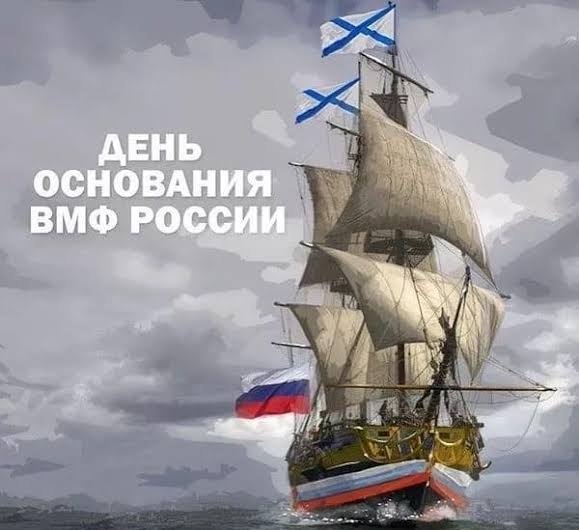
On October 30, 1696, the Boyar Duma, at the suggestion of Tsar Peter I, adopted the decree "there will be naval vessels... ", which became the first law on the navy and official recognition of its establishment.
During the Northern War of 1700–1721, the Baltic Fleet was created, which promoted Russia to one of the great naval powers. The first warships for him were built in the years 1702-1703 at the mouth of the Sias River on Lake Ladoga and on the Savir River. In 1703, the Russian naval base was founded in the Baltic Sea - Kroneslot (later - Kronstadt). During the Northern War, the main tasks of the flotilla were determined, the list of which remains almost unchanged to this day, and they are: fighting the enemy's naval forces, fighting naval communications, protecting the coast from the sea, assisting the army in the coastal directions, attacking and ensuring the invasion of the sea to the sea. board. The proportion of these missions changed as the material resources and the nature of the armed struggle at sea changed. Accordingly, the role and place of individual branches in the fleet that were part of the fleet changed. Permanent groups of forces in naval theaters were formed as the Russian state solved historical problems related to the acquisition of access to the world oceans and the inclusion of the state in the world economy and politics. In 2017, by order of the president, for the first time in modern history, the main naval parade was held in St. Petersburg. In terms of the scale of the event, the number of ships and aircraft involved, this event can be compared to the Victory Parade on May 9 in Red Square in Moscow.