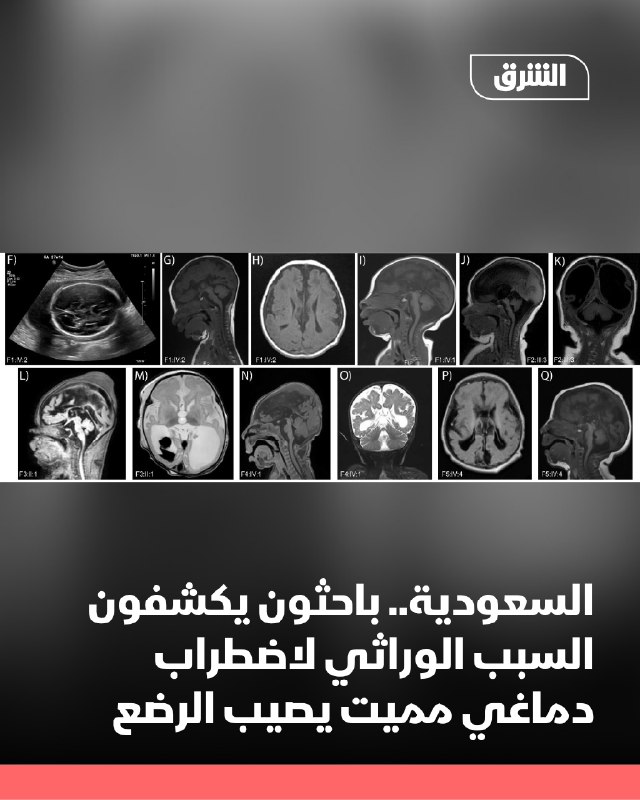
Researchers from the King Abdullah University of Science and Technology (KAUST) and the Faisal Legislative Hospital and Research Center (KFSHRC) in Saudi Arabia have uncovered a previously unknown genetic cause of a fatal brain disorder that affects infants and children, affecting brain development before birth and causing epileptic seizures, severe developmental difficulties in brain structure, and major deformities. The discovery came in a study published in the journal Genome Medicine that included 5 unrelated families from Saudi Arabia, Europe and North America, some of whom had lost more than one child to an unexplained disease. It was found that the affected children carry changes in the VPS25 gene, which is responsible for the safety of nerve cells. Tests showed a defect in vital processes that led to a change in the number of microvesicles released from the cells and a lack of important proteins to protect them. The results represent the first evidence that changes in this gene are associated with the disorder in humans, and add a gene that doctors can consider when investigating cases of brain defects of unknown cause. It also supports genetic counseling for affected families and identification of the disease during pregnancy through genetic testing.
Researchers from the King Abdullah University of Science and Technology (KAUST) and the Faisal Legislative Hospital and Research Center (KFSHRC) in Saudi Arabia have uncovered a previously unknown genetic cause of a fatal brain disorder that affects infants and children, affecting brain development before birth and causing epileptic seizures, severe developmental difficulties in brain structure, and major deformities. The discovery came in a study published in the journal Genome Medicine that included 5 unrelated families from Saudi Arabia, Europe and North America, some of whom had lost more than one child to an unexplained disease. It was found that the affected children carry changes in the VPS25 gene, which is responsible for the safety of nerve cells. Tests showed a defect in vital processes that led to a change in the number of microvesicles released from the cells and a lack of important proteins to protect them. The results represent the first evidence that changes in this gene are associated with the disorder in humans, and add a gene that doctors can consider when investigating cases of brain defects of unknown cause. It also supports genetic counseling for affected families and identification of the disease during pregnancy through genetic testing.
🇸🇦 Saudi Arabia · Map
More on Radar
Want to see every report in real time?
Hundreds of sources worldwide, translated into your language, with alerts for what matters to you.
Sign up free Already have an account? Log in