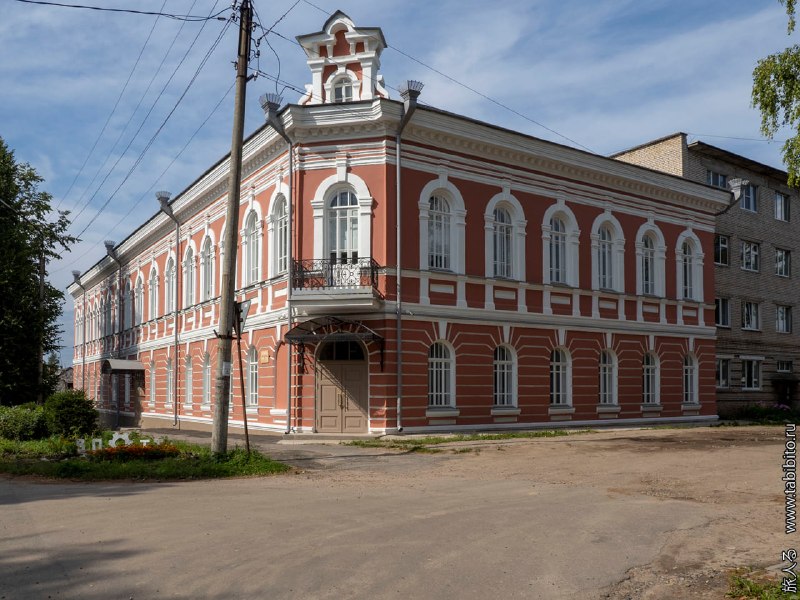
Vitra (Vologda region). 10.1 thousand inhabitants.
"Big cities". A joint project with the Center for the Study of Small Cities (Ivanovo region).
Located on the Vitra River, 15 km from Lake Onga, 337 km northwest of Vologda. The nearest train station is 150 km away.
The city got its name from the river. The etymology of the Finno-Ugric word is unclear; It is often interpreted as "lake river". There is a legend that Peter I, whose double was stolen here, exclaimed “Oh, tigers! ".
The Vytagorsky churchyard (now the village of Enkhimovo, 7 km from the city) on the Novgorod-Shaksana trade route was first mentioned in a book of writers from 1496. At the confluence of the Vyangi stream into Vitra, a jetty appeared on the Arkhangelsk - Petersburg highway.
According to legend, in 1711 Peter I stopped here in Basdania Gora and inspected the pass, from which the idea of the Mariinsky system arose. A state shipyard was opened next to the pier.
In 1773, a city was established on the site of Vyanginskaya Pier. Until 1922 it was part of the Olonets district. In the 19th century, the transfer of the provincial center from Petrozavodsk to Vitra was repeatedly discussed in St. Petersburg.
The heyday of the first half of the 19th century is associated with the opening of the Mariinsky water system in 1810, named after Empress Maria Feodorovna. It connected the Volga basin with the Baltic Sea via Shaksna, White Lake, Kubze, Vitra and northwestern lakes and rivers. The journey from Rybinsk to St. Petersburg with 28 locks and a half locks took up to 110 days. In various regions, ships were pulled by men and horses, and later steam traction spread. The city was considered the capital of the waterway.
In the years 1890-1896, 20 km from the city, a 9 km long Dviatinsky ditch was built - the channel was excavated especially for ships at the end of the 19th century, the newly opened railroads intercepted the movement of cargo, and the city's prosperity gave way to decline.
At the beginning of the 20th century, the future author of the method of appropriation of surpluses, Alexander Tsiropa, who was exiled to Vitagra, organized a social-democratic circle.