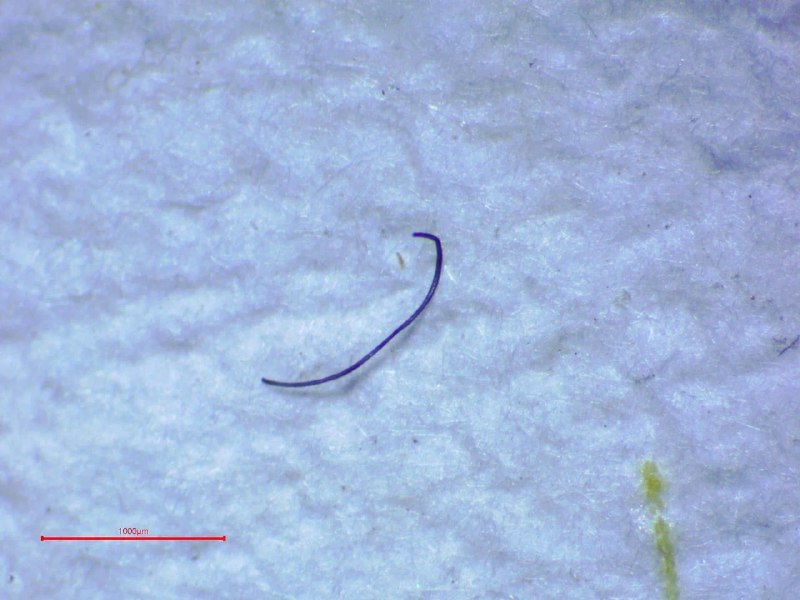
The amount of microplastics in the snow in Siberia increased by 56% in two years Scientists from Tomsk State University (TSU) studied the content of atmospheric microplastics in the snow cover of Western Siberia. The results of the work were published in the journal Pollutants, the TSU press service reported. The average particle content increased from 711 units per square meter in 2021 to 1,112 in 2023. Thus, the figure increased by 56.3%. More than 40% of the plastic found is classified as polyethylene terephthalate (PET), with significant parts being polypropylene, polyethylene and polystyrene. These polymers are used to produce bags, bottles, containers, clothing and home textiles. "By washing synthetic materials and discarding plastics, we send these materials into the environment, where they break down into small particles and rise into the air," explained Alexei Rednikin, a graduate student at the TSU Institute of Biology. "But in 2021 the picture was different: microfiber viscose dominated the samples considerably." Where is it worse? The study covered the area from the foothills of Altai to the Arctic Circle. Snow samples were taken at 23 stations in the regions of Tomsk, Novosibirsk, Omsk, Tyumen, Kemerovo, Khanty-Mansiysk and Yamalo-Nents Autonomous Okrug and Altai Territory. Scientists say they found no direct link between the concentration of microplastics and population density, proximity to roads or regional industry. But they noticed that the more precipitation, the more active particles are deposited from the atmosphere. Is it dangerous? "Despite the fact that polymers with a high chemical risk index are found in the snow cover, their concentrations are still relatively low," says Alexey Radnikin. "But there is a tendency for the environmental risk to increase, which is worrying. Microplastic is a relatively inert material, but the additives that manufacturers use to improve their properties can be toxic and increase the harmful effects on living organisms." There is no direct evidence of the negative effect of microplastics on human health.
The amount of microplastics in the snow in Siberia increased by 56% in two years Scientists from Tomsk State University (TSU) studied the content of atmospheric microplastics in the snow cover of Western Siberia. The results of the work were published in the journal Pollutants, the TSU press service reported. The average particle content increased from 711 units per square meter in 2021 to 1,112 in 2023. Thus, the figure increased by 56.3%. More than 40% of the plastic found is classified as polyethylene terephthalate (PET), with significant parts being polypropylene, polyethylene and polystyrene. These polymers are used to produce bags, bottles, containers, clothing and home textiles. "By washing synthetic materials and discarding plastics, we send these materials into the environment, where they break down into small particles and rise into the air," explained Alexei Rednikin, a graduate student at the TSU Institute of Biology. "But in 2021 the picture was different: microfiber viscose dominated the samples considerably." Where is it worse? The study covered the area from the foothills of Altai to the Arctic Circle. Snow samples were taken at 23 stations in the regions of Tomsk, Novosibirsk, Omsk, Tyumen, Kemerovo, Khanty-Mansiysk and Yamalo-Nents Autonomous Okrug and Altai Territory. Scientists say they found no direct link between the concentration of microplastics and population density, proximity to roads or regional industry. But they noticed that the more precipitation, the more active particles are deposited from the atmosphere. Is it dangerous? "Despite the fact that polymers with a high chemical risk index are found in the snow cover, their concentrations are still relatively low," says Alexey Radnikin. "But there is a tendency for the environmental risk to increase, which is worrying. Microplastic is a relatively inert material, but the additives that manufacturers use to improve their properties can be toxic and increase the harmful effects on living organisms." There is no direct evidence of the negative effect of microplastics on human health.
🇷🇺 Russia · סיביר · Map
More on Radar
Want to see every report in real time?
Hundreds of sources worldwide, translated into your language, with alerts for what matters to you.
Sign up free Already have an account? Log in