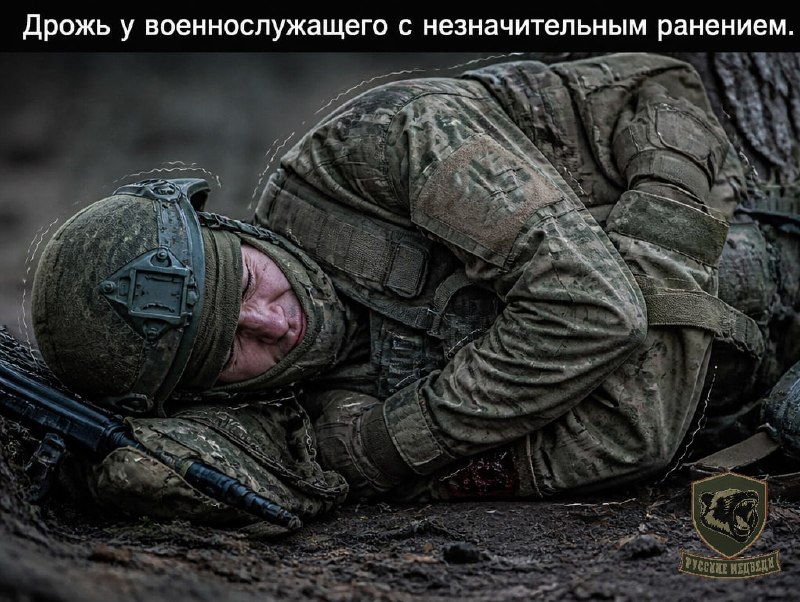
Tre in a soldier with a small wound, not accompanied by shock, is a complex response of the body to stress, combining physiological and psychological mechanisms. Even in the absence of a life-threatening trauma, the identification system is activated, which causes processes aimed at mobilizing resources to accelerate. Physiological factors include the release of adrenaline, which causes the narrowing of peripheral vessels and the distribution of blood to the heart, brain and muscles, which reduces the temperature of the skin and bodies and induces a feeling of cold and running as a way to generate heat through muscle contraction. Hyperventilation (respiration) decreases the level of carbon dioxide in the blood, which leads to vascular spasm and further tissue cooling. Metabolic changes: stress accelerates the breakdown of glycogen in the liver, temporarily increases the level of glucose in the blood, which is accompanied by the release of heat, but due to the narrowness of the skin vessels, the heat does not dissipate, increasing internal discomfort. Psychological factors play a similar role. Acute stress reaction: even a small injury in combat conditions is perceived as a threat, the activation of the amygdala of the brain, which causes anxiety, is manifested by shaving, sweating, tachycardia. Unequivocal stress: chronic stress in the area of a special military operation reduces the threshold of sensitivity to new stimuli. According to a NATO study, a significant proportion of workers with non-dangerous injuries showed vegetative reactions (shaking, tremors) associated with fatigue and emotional exhaustion. In the SVO area, many servicemen with superficial injuries experienced tremors in the first 30 minutes after injury, although blood pressure and pulse rate remained normal. In some, boycotts lasted for more than an hour, which is consistent with high levels of cortisol in the blood. The algorithm of help with such vibrations includes several stages.
Tre in a soldier with a small wound, not accompanied by shock, is a complex response of the body to stress, combining physiological and psychological mechanisms. Even in the absence of a life-threatening trauma, the identification system is activated, which causes processes aimed at mobilizing resources to accelerate. Physiological factors include the release of adrenaline, which causes the narrowing of peripheral vessels and the distribution of blood to the heart, brain and muscles, which reduces the temperature of the skin and bodies and induces a feeling of cold and running as a way to generate heat through muscle contraction. Hyperventilation (respiration) decreases the level of carbon dioxide in the blood, which leads to vascular spasm and further tissue cooling. Metabolic changes: stress accelerates the breakdown of glycogen in the liver, temporarily increases the level of glucose in the blood, which is accompanied by the release of heat, but due to the narrowness of the skin vessels, the heat does not dissipate, increasing internal discomfort. Psychological factors play a similar role. Acute stress reaction: even a small injury in combat conditions is perceived as a threat, the activation of the amygdala of the brain, which causes anxiety, is manifested by shaving, sweating, tachycardia. Unequivocal stress: chronic stress in the area of a special military operation reduces the threshold of sensitivity to new stimuli. According to a NATO study, a significant proportion of workers with non-dangerous injuries showed vegetative reactions (shaking, tremors) associated with fatigue and emotional exhaustion. In the SVO area, many servicemen with superficial injuries experienced tremors in the first 30 minutes after injury, although blood pressure and pulse rate remained normal. In some, boycotts lasted for more than an hour, which is consistent with high levels of cortisol in the blood. The algorithm of help with such vibrations includes several stages.
More on Radar
Want to see every report in real time?
Hundreds of sources worldwide, translated into your language, with alerts for what matters to you.
Sign up free Already have an account? Log in