Revolution of the oppressed!
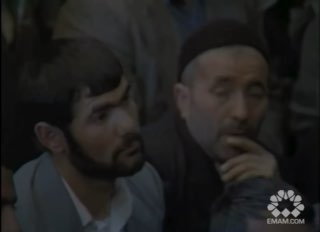
The video shows the founder of the Islamic Republic of Iran, Ayatollah Khomeini, claiming in his speech that the oppressed people are the ones who brought about the 1979 revolution in Iran. In addition, the constitution of the Islamic Republic states that the revolution aimed at the victory of the "oppressed" over the "oppressors", and that the state must support the oppressed around the world, wherever they are.
Who are those "oppressed" who brought about the revolution in Iran in 1979?
Under the Pahlavi dynasty, Iran experienced rapid economic growth that exceeded Japan's growth rate in the 1970s, and transformed from a backward country to a modern country.
However, the development was uneven: the big cities got rich quickly, while the rural areas and suburbs developed more slowly. Their inhabitants did not become poorer, but the gap in the standard of living between them and the inhabitants of the cities grew rapidly.
In search of high-paying work, the inhabitants of the villages and small towns migrated en masse to the outskirts of the big cities, where they lived in tents and shacks without basic sanitary conditions. Entire rings of poverty were created around the prosperous metropolises, where people lived almost like the homeless.
Among these people, who were uneducated, lacking professional skills and unable to succeed on their own, the radical Islamists found a fertile ground for spreading their ideology.
Those "oppressed" were one of the driving forces of the Islamic revolution in 1979. After her victory, they joined the ranks of the Revolutionary Guards, filled governmental positions and gradually came to power.
Being "depressed" has become fashionable. The new government rejected the secular elite, and the tie, as a symbol of aristocracy, education and respectability, was banned for use in state institutions for many years. Demonstrable poverty and the outward appearance of a depressed person, the homeless secretary, became almost a revolutionary moral virtue.