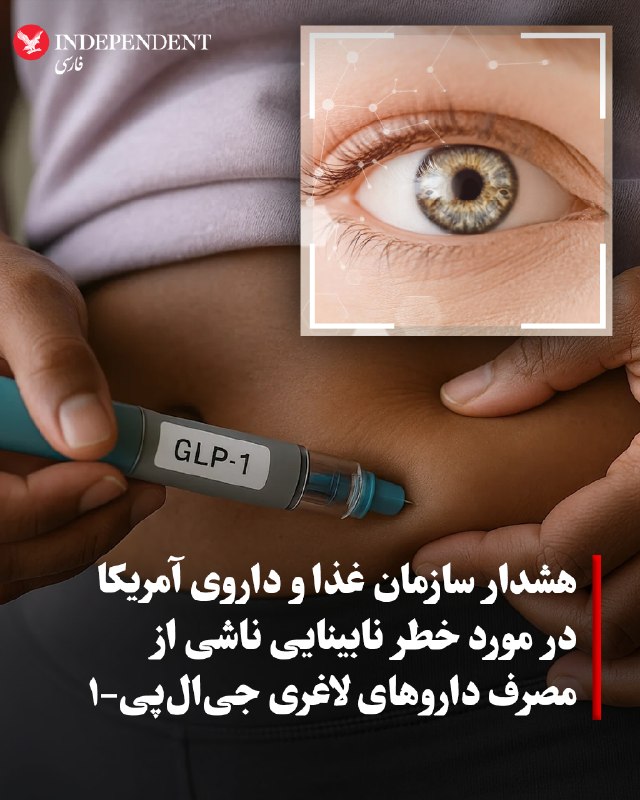
The United States Food and Drug Administration (FDA) announced that widely used weight loss and diabetes drugs from the GLP-1 family should be accompanied by a new warning regarding the possibility of a rare but serious eye complication; A complication that in some cases may lead to permanent vision loss.
This warning includes drugs such as Ozampic and Vigobi from Novo Nordisk and Mongero and Zipend from Eli Lilly. The FDA asked manufacturers to add information about the potential risk of "non-arterial anterior ischemic neuropathy of the optic nerve" (NAION) to the warnings and precautions section of the drug package insert.
This disease is one of the common causes of sudden blindness, which usually occurs without pain. This complication is caused by reduced blood flow to the front part of the optic nerve, and in some patients it may cause permanent vision damage.
The FDA said it reviewed data from clinical trials, animal studies, post-marketing adverse event reports and observational studies to assess this risk.
The warning comes as the European Medicines Agency announced in 2025 that this complication could occur in up to one in 10,000 users of medicines containing semaglutide, including Ozampi and Vigobi.
Also, a large study in 2025, which compared almost 175,000 diabetic patients taking semaglutide with the same number of patients receiving other drugs, showed that the risk of developing this complication more than doubled after two years of taking GLP-1 drugs.
However, the cause-and-effect relationship is still inconclusive, CNN writes. The manufacturing companies also say that the existing evidence does not prove such a connection and the therapeutic benefits of these drugs are still significant.
This warning does not mean a ban on the use of these drugs, but it shows the need to pay attention to the possible side effects and carefully assess the relationship between the benefits and risks of the treatment.