Radar Telegram alerts Open Radar

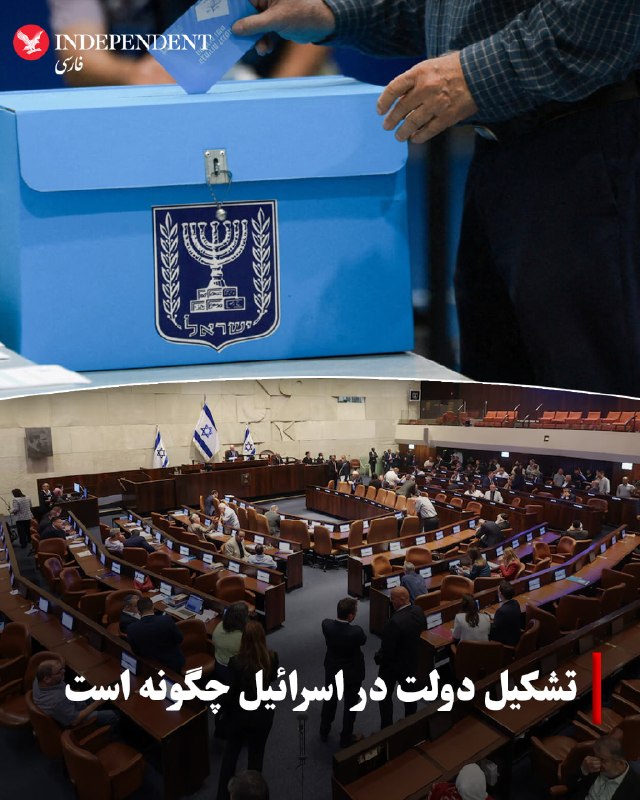
In Israel's political structure, a prime minister is not directly elected, but parties are voted for. The parliament of this country (the Knesset) has 120 seats and anyone who wants to form a government must have the consent and support of at least 61 representatives behind him. Since no party managed to win a number of seats on its own, the parties have no choice but to form a coalition and unite with each other. After the votes are counted, the president holds a meeting with party leaders and entrusts the formation of the government to whoever has the best chance of picking up those 61 seats. If that person cannot reach an agreement with the others within the legal time, the opportunity will be given to the next person; And if no one succeeds, the parliament will be dissolved and new elections will be held. During all this time, the current Prime Minister temporarily remained in office.

תרגם לעברית

IndyPersian · · Source

🇮🇱 Israel · Map

In Israel's political structure, a prime minister is not directly elected, but parties are voted for. The parliament of this country (the Knesset) has 120 seats and anyone who wants to form a government must have the consent and support of at least 61 representatives behind him. Since no party managed to win a number of seats on its own, the parties have no choice but to form a coalition and unite with each other. After the votes are counted, the president holds a meeting with party leaders and entrusts the formation of the government to whoever has the best chance of picking up those 61 seats. If that person cannot reach an agreement with the others within the legal time, the opportunity will be given to the next person; And if no one succeeds, the parliament will be dissolved and new elections will be held. During all this time, the current Prime Minister temporarily remained in office.

In Israel's political structure, a prime minister is not directly elected, but parties are voted for. The parliament of this country (the Knesset) has 120 seats and anyone who wants to form a government must have the consent and support of at least 61 representatives behind him. Since no party managed to win a number of seats on its own, the parties have no choice but to form a coalition and unite with each other. After the votes are counted, the president holds a meeting with party leaders and entrusts the formation of the government to whoever has the best chance of picking up those 61 seats. If that person cannot reach an agreement with the others within the legal time, the opportunity will be given to the next person; And if no one succeeds, the parliament will be dissolved and new elections will be held. During all this time, the current Prime Minister temporarily remained in office.

According to the latest exit polls on Israeli television channels, the November 5 elections brought the country to a dead end. Although the Likud party led by Binyamin Netanyahu won the most seats among the parties by winning 24-25 seats, the total of its allies from the right reaches only 50 seats and has 11 seats less. On the other hand, the opposition camp led by Gadi Eisenkot is ahead with about 52-53 mandates, but to reach the number of 61 it must unite with the Arab parties (with 17-18 mandates); An event that seems almost impossible due to strong differences between some of the members of this faction and the Arab parties.

More on Radar

Want to see every report in real time?

Hundreds of sources worldwide, translated into your language, with alerts for what matters to you.

Sign up free
Share on WhatsApp Get alerts on Telegram