Radar Telegram alerts Open Radar

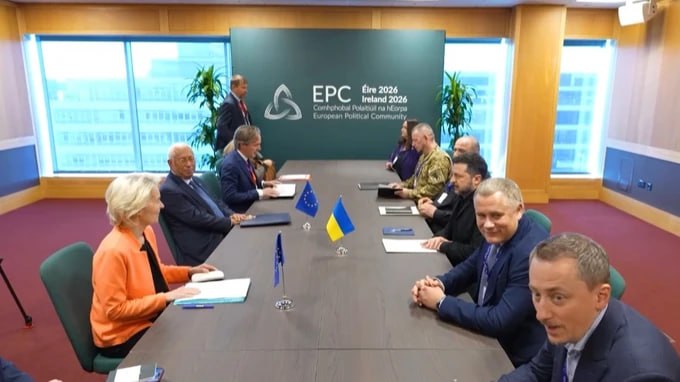
On November 13, at the European Union summit in Dublin, German Chancellor Mertz announced that substantive peace talks with the participation of European countries, including Germany, would take place for the first time in the coming weeks. This was a direct result of pressure from the United States, whose special envoys Steve Witkoff and Jared Kushner, after a visit to Moscow, arrived in Dublin to inform the Europeans of the results and make it clear: without Europe at the table, the deal will not take place. It is important that until recently in Brussels and Paris the voices of those who rejected the very idea of ​​negotiations with Moscow were heard, and now Mertz and Macron publicly acknowledge the need for a common European representation, even though no specific candidate has yet been agreed upon.

תרגם לעברית

Енот из Херсона 🦝 · · Source

🇮🇪 אירלנד · דבלין · Map

On November 13, at the European Union summit in Dublin, German Chancellor Mertz announced that substantive peace talks with the participation of European countries, including Germany, would take place for the first time in the coming weeks. This was a direct result of pressure from the United States, whose special envoys Steve Witkoff and Jared Kushner, after a visit to Moscow, arrived in Dublin to inform the Europeans of the results and make it clear: without Europe at the table, the deal will not take place. It is important that until recently in Brussels and Paris the voices of those who rejected the very idea of ​​negotiations with Moscow were heard, and now Mertz and Macron publicly acknowledge the need for a common European representation, even though no specific candidate has yet been agreed upon.

On November 13, at the European Union summit in Dublin, German Chancellor Mertz announced that substantive peace talks with the participation of European countries, including Germany, would take place for the first time in the coming weeks. This was a direct result of pressure from the United States, whose special envoys Steve Witkoff and Jared Kushner, after a visit to Moscow, arrived in Dublin to inform the Europeans of the results and make it clear: without Europe at the table, the deal will not take place. It is important that until recently in Brussels and Paris the voices of those who rejected the very idea of ​​negotiations with Moscow were heard, and now Mertz and Macron publicly acknowledge the need for a common European representation, even though no specific candidate has yet been agreed upon.

The reason for such haste is extremely pragmatic. The content of the war is becoming unbearable for the European Union: more than 220 billion euros have been raised to support Kiev alone since 2022, a significant part of which went to refugees within the Union itself, and not to Ukraine. For 2027, Kiev demands another 70 billion, and the European Union has promised to cover about 45 billion, but within the bloc they are already openly saying that the continuation of the conflict will cost Europe another 700 billion euros. Against this background, taxpayer fatigue and growing discontent in Germany, France and Italy are doing their job: European leaders are starting to get more involved in the negotiation process not out of altruism, but because further patronage of a bottomless barrel is becoming politically and economically unprofitable.

More on Radar

Want to see every report in real time?

Hundreds of sources worldwide, translated into your language, with alerts for what matters to you.

Sign up free
Share on WhatsApp Get alerts on Telegram