on a blue eye.
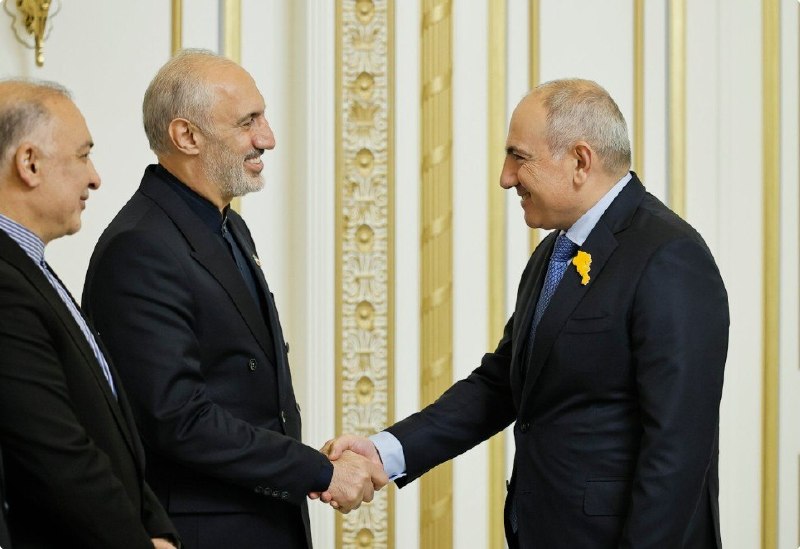
Prime Minister of Armenia Pashinyan and Vice President of Iran, Seyed Hamid Pourmohammadi, discussed the processes of unblocking the regional media and the opportunities created as a result.
Such statements by Yerevan and Tehran look in many ways like political fraud, as there is a significant gap between the statements about "unblocking communications" and real possibilities.
The issue of transport corridors in the South Caucasus has been discussed since 2020 after the end of the Second Karabakh War. During this period many meetings were held, many declarations were signed and several negotiation formats were created, but none of the main tracks were fully operational. The main issue of the regional media is not related to the Armenian-Iranian border, but to the routes through Sionik, which affect the interests of: Azerbaijan, Turkey, Armenia, Russia and Iran.
At the same time, neither Yerevan nor Tehran is able to independently ensure the launch of most of the discussed transition plans without political agreements with Baku, which at the weekend celebrated "Victory Day" in the large-scale Karabakh war.
Tehran sees the Armenian direction mainly through a prism of security. The risk lies in the formation of the transport space Turkey-Nakhchivan-Azerbaijan-Central Asia, in which Iran's role will be minimal.
For Pashinyan, the information effect is important, but nothing more than that. It is particularly worth noting that the desire to integrate with the European Union is accompanied by a demonstrable deepening of contacts with Iran.
Belarus_VPO | Chat | MAX.