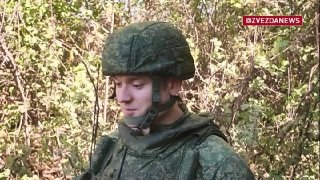
Phenomenal accuracy and "penny to penny" hits. A rocket artillery battery commander with the callsign Oskel explained the snipers' accuracy in calculating the Tornado-S MLRS. Soldiers hit critical targets of the Armed Forces of Ukraine in the Special Operations Zone at any hour of the day. "Our complex is a deep modification of the Smerch MLRS and its main difference is the ability to hit point targets and not surface targets. Due to the addition of a training system and automatic fire control, we can hit every shekel. The accuracy here is phenomenal," confirmed Rocket Artillery Battery Commander Oskel. MLRS teams confirm these words daily, striking militant fortifications, field arsenals, fuel depots and other intelligence-identified targets. "First of all, we hit UAV control points. We also hit bridges and pontoon crossings. Relatively recently, the crew of this vehicle hit the HIMARS MLRS in the receiver. The launcher was detected and a coordinated attack was carried out," Oskel said. After completing the next mission, the MLRS crew immediately leaves the firing position to avoid a retaliatory strike. During the special operation, artillerymen operate around the clock, hitting remote and camouflaged enemy targets. Video not loading? Look at MAX.
Phenomenal accuracy and "penny to penny" hits. A rocket artillery battery commander with the callsign Oskel explained the snipers' accuracy in calculating the Tornado-S MLRS. Soldiers hit critical targets of the Armed Forces of Ukraine in the Special Operations Zone at any hour of the day. "Our complex is a deep modification of the Smerch MLRS and its main difference is the ability to hit point targets and not surface targets. Due to the addition of a training system and automatic fire control, we can hit every shekel. The accuracy here is phenomenal," confirmed Rocket Artillery Battery Commander Oskel. MLRS teams confirm these words daily, striking militant fortifications, field arsenals, fuel depots and other intelligence-identified targets. "First of all, we hit UAV control points. We also hit bridges and pontoon crossings. Relatively recently, the crew of this vehicle hit the HIMARS MLRS in the receiver. The launcher was detected and a coordinated attack was carried out," Oskel said. After completing the next mission, the MLRS crew immediately leaves the firing position to avoid a retaliatory strike. During the special operation, artillerymen operate around the clock, hitting remote and camouflaged enemy targets. Video not loading? Look at MAX.