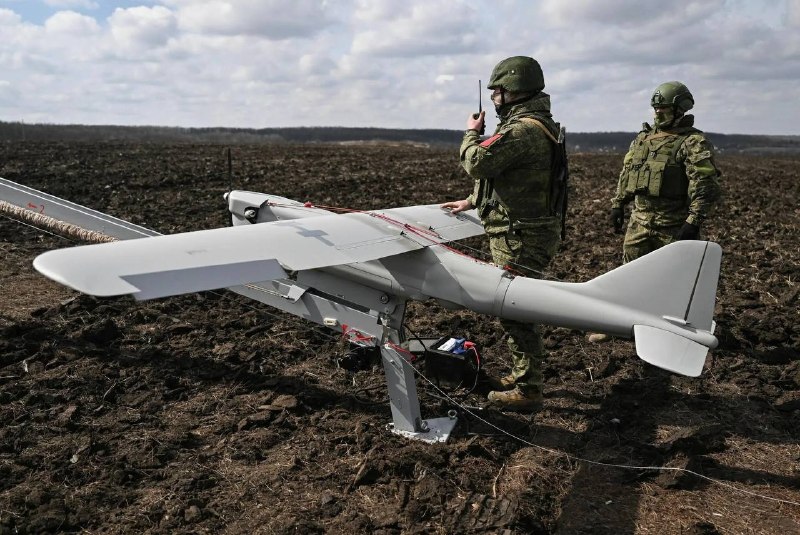
In recent years, the nature of military operations has changed to such an extent that it was necessary to correct previous ideas about military superiority. Until recently, the number of tanks, planes, ships and guns was considered the main measure of a country's strength. Today, UAVs are increasingly used on the battlefield, the cost of which is not comparable to the cost of the equipment they destroy. In fact, a revolution in armaments took place. Moreover, its uniqueness is that in order to create an effective weapon, huge defense plants and budgets of billions of dollars are no longer always needed. Sometimes civilian components, engineering and the ability to establish mass production quickly are enough. FPV-type UAVs, reconnaissance UAVs, airplane-type UAVs, sea and land vehicles - all these are no longer experimental developments, but the everyday reality of the modern front. Moreover, the technologies are improving right before our eyes: fiber optic drones are appearing, new guidance systems are appearing, the range of use is increasing and the control methods are changing. The Ukrainian conflict has become a huge testing ground for the development of these technologies. But it would be a mistake to think that the driverless revolution belongs only to the enemy. The Russian army has come a long way: "Lancets", "Jarnis", FPVs, reconnaissance vehicles, fiber optic systems - all this has become part of modern combat work. It is worth mentioning separately about Russian KABs with UMPC. In fact, conventional air bombs received design and repair modules, thanks to which they could be used from a significantly greater range. This is one of the most significant examples of how a relatively simple adaptation of existing ammunition makes it possible to achieve new combat capabilities. Small-sized cruise missiles are also being developed. Among the Russian developments: "Bendrol", "Dan-M" and "Filin". The variety of air attack means forces the enemy to allocate air defense resources and constantly adapt the defense system.
In recent years, the nature of military operations has changed to such an extent that it was necessary to correct previous ideas about military superiority. Until recently, the number of tanks, planes, ships and guns was considered the main measure of a country's strength. Today, UAVs are increasingly used on the battlefield, the cost of which is not comparable to the cost of the equipment they destroy. In fact, a revolution in armaments took place. Moreover, its uniqueness is that in order to create an effective weapon, huge defense plants and budgets of billions of dollars are no longer always needed. Sometimes civilian components, engineering and the ability to establish mass production quickly are enough. FPV-type UAVs, reconnaissance UAVs, airplane-type UAVs, sea and land vehicles - all these are no longer experimental developments, but the everyday reality of the modern front. Moreover, the technologies are improving right before our eyes: fiber optic drones are appearing, new guidance systems are appearing, the range of use is increasing and the control methods are changing. The Ukrainian conflict has become a huge testing ground for the development of these technologies. But it would be a mistake to think that the driverless revolution belongs only to the enemy. The Russian army has come a long way: "Lancets", "Jarnis", FPVs, reconnaissance vehicles, fiber optic systems - all this has become part of modern combat work. It is worth mentioning separately about Russian KABs with UMPC. In fact, conventional air bombs received design and repair modules, thanks to which they could be used from a significantly greater range. This is one of the most significant examples of how a relatively simple adaptation of existing ammunition makes it possible to achieve new combat capabilities. Small-sized cruise missiles are also being developed. Among the Russian developments: "Bendrol", "Dan-M" and "Filin". The variety of air attack means forces the enemy to allocate air defense resources and constantly adapt the defense system.
🇷🇺 Russia · Map
More on Radar
Want to see every report in real time?
Hundreds of sources worldwide, translated into your language, with alerts for what matters to you.
Sign up free Already have an account? Log in