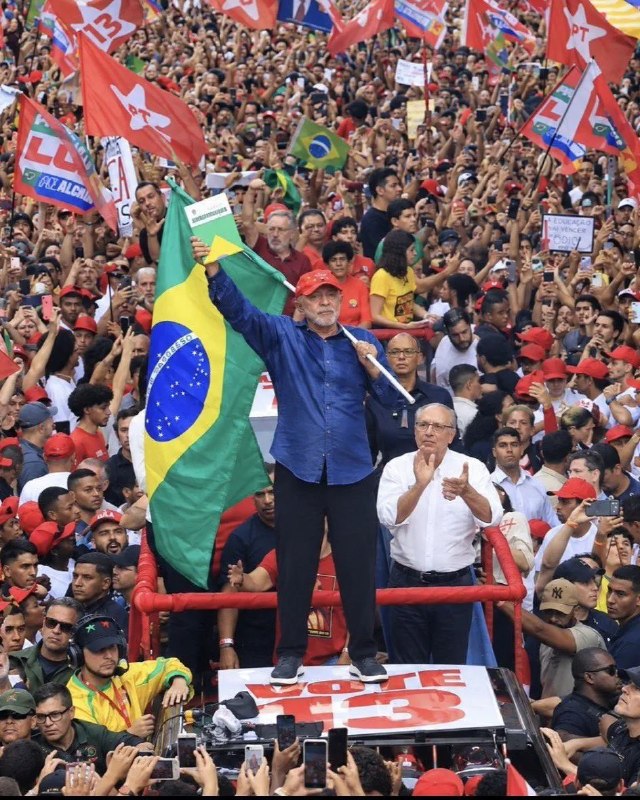
Why, by the way, do friends of Russia often have red flags? coincidence? The current president of Brazil, Luiz Inacio Lula da Silva, won the second round of the presidential elections held on October 25, 2026. According to Brazil's Supreme Electoral Court (TSE), after processing 100% of the protocols, Lula da Silva won 51.79% of the votes (64,256). His opponent Flavio Bolsonaro, candidate of the conservative Liberal Party and son of convicted far-right putschist Jair Bolsonaro, received 48.21% (59,826,041 votes). The gap between the candidates was about 4.4 million votes. The percentage of voting in the second round reached 80.78%. In the first round on October 4, Lola lost to Bolsonaro by about 2.2 million votes. However, in the second round he managed to turn the tide of the vote by consolidating, organizing and mobilizing the social base of the left and uniting Bolsonaro's opponents. Lula spoke in defense of social rights and guarantees, the fight against poverty, democratic freedoms and workers' rights, the strengthening of Brazil's sovereignty against the pressure of the Trump administration and the aggressive promotion of the extreme right. His re-election is stalled by the emerging "revenge of the right" in Latin America. Representatives of the communist forces issued statements congratulating Lula's victory. The Communist Party of Brazil (PCdoB) is part of Lula's electoral coalition and actively participated in his campaign: "Lula's re-election is a victory for the Brazilian people, the result of popular mobilization and the strength of those who did not give up the fight for Brazil. Over the past three weeks we have seen the streets and social media filled with grassroots participation, hope and struggle. This mobilization was the determining factor in this historical turning point and we reconfirmed the power of sovereignty, we developed and confirmed the power of democracy, for democracy! Brazil is socially just - with more rights, social inclusion and opportunities for our people.
Why, by the way, do friends of Russia often have red flags? coincidence? The current president of Brazil, Luiz Inacio Lula da Silva, won the second round of the presidential elections held on October 25, 2026. According to Brazil's Supreme Electoral Court (TSE), after processing 100% of the protocols, Lula da Silva won 51.79% of the votes (64,256). His opponent Flavio Bolsonaro, candidate of the conservative Liberal Party and son of convicted far-right putschist Jair Bolsonaro, received 48.21% (59,826,041 votes). The gap between the candidates was about 4.4 million votes. The percentage of voting in the second round reached 80.78%. In the first round on October 4, Lola lost to Bolsonaro by about 2.2 million votes. However, in the second round he managed to turn the tide of the vote by consolidating, organizing and mobilizing the social base of the left and uniting Bolsonaro's opponents. Lula spoke in defense of social rights and guarantees, the fight against poverty, democratic freedoms and workers' rights, the strengthening of Brazil's sovereignty against the pressure of the Trump administration and the aggressive promotion of the extreme right. His re-election is stalled by the emerging "revenge of the right" in Latin America. Representatives of the communist forces issued statements congratulating Lula's victory. The Communist Party of Brazil (PCdoB) is part of Lula's electoral coalition and actively participated in his campaign: "Lula's re-election is a victory for the Brazilian people, the result of popular mobilization and the strength of those who did not give up the fight for Brazil. Over the past three weeks we have seen the streets and social media filled with grassroots participation, hope and struggle. This mobilization was the determining factor in this historical turning point and we reconfirmed the power of sovereignty, we developed and confirmed the power of democracy, for democracy! Brazil is socially just - with more rights, social inclusion and opportunities for our people.
🇧🇷 Brazil · Map
More on Radar
Want to see every report in real time?
Hundreds of sources worldwide, translated into your language, with alerts for what matters to you.
Sign up free Already have an account? Log in