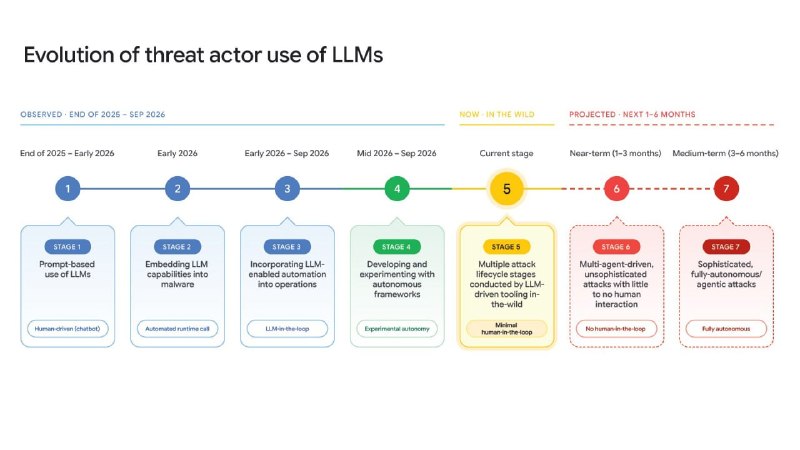
Google has published a new report on how hackers are increasingly using artificial intelligence to carry out cyber attacks, gradually delegating to it tasks that were previously performed manually. Basic instructions: According to researchers at Google and Mandiant, the attackers are already using AI systems that can independently search for vulnerabilities, write hacking tools and attack servers. Such systems make it possible to analyze potential targets almost around the clock, identify weak points and look for ways to exploit them. In one case, attackers launched attacks on hundreds of organizations just four days after vulnerabilities in the PaperCut print management system were exposed, and in some cases gained administrative access within minutes. Separately, Google describes the activities of alleged North Korean hackers who modified configuration files for Anthropic's Cloud Code programming tools in corporate repositories, ensuring that malware was automatically loaded when it was launched. In addition, researchers documented the development of a platform to manage more than 100,000 fake accounts in social networks. The AI was supposed to independently create posts, interact with users and mimic the behavior of real people, including typos, use of local slang and normal daily activities. Autonomous artificial intelligence systems still leave a lot of digital footprints and make mistakes, but they can already significantly increase and accelerate cyber attacks, and carry them out with minimal human intervention.
Google has published a new report on how hackers are increasingly using artificial intelligence to carry out cyber attacks, gradually delegating to it tasks that were previously performed manually. Basic instructions: According to researchers at Google and Mandiant, the attackers are already using AI systems that can independently search for vulnerabilities, write hacking tools and attack servers. Such systems make it possible to analyze potential targets almost around the clock, identify weak points and look for ways to exploit them. In one case, attackers launched attacks on hundreds of organizations just four days after vulnerabilities in the PaperCut print management system were exposed, and in some cases gained administrative access within minutes. Separately, Google describes the activities of alleged North Korean hackers who modified configuration files for Anthropic's Cloud Code programming tools in corporate repositories, ensuring that malware was automatically loaded when it was launched. In addition, researchers documented the development of a platform to manage more than 100,000 fake accounts in social networks. The AI was supposed to independently create posts, interact with users and mimic the behavior of real people, including typos, use of local slang and normal daily activities. Autonomous artificial intelligence systems still leave a lot of digital footprints and make mistakes, but they can already significantly increase and accelerate cyber attacks, and carry them out with minimal human intervention.
More on Radar
Want to see every report in real time?
Hundreds of sources worldwide, translated into your language, with alerts for what matters to you.
Sign up free Already have an account? Log in