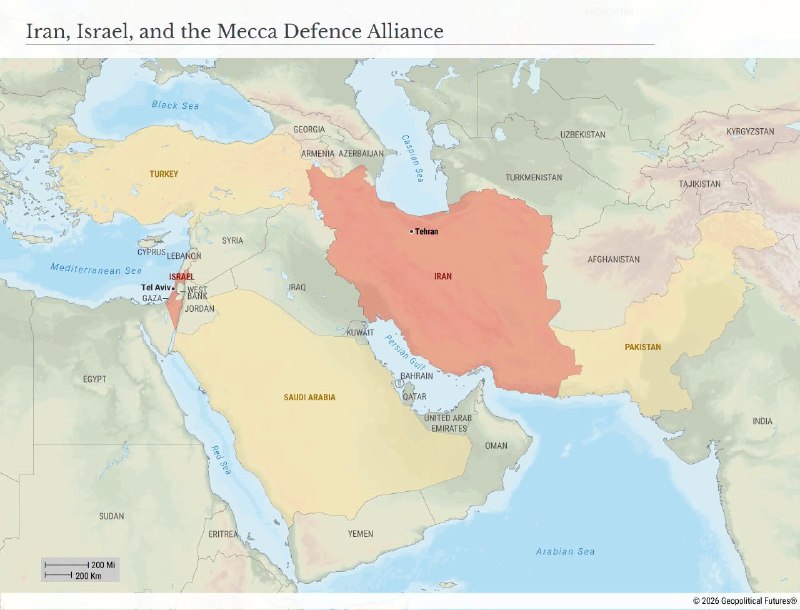
Map from the Geopolitical Futures Analytical Center, dedicated to the Mecca Agreement - "the very new Muslim NATO, which includes Saudi Arabia, Turkey and Pakistan." According to this think tank, the Mecca agreement largely serves the interests of the United States, which wants regional players to be more active in opposing Iran. This fits into the new geopolitical strategy of the US - increasing the independence of regional actors and transferring part of the responsibility for security in the region to them. Within this logic, Washington is also interested in ensuring that new Israeli actions against Iran do not harm US relations with Sunni countries. In general, even without the newest US strategy, this is a fairly old approach from Washington - maintaining a regional balance of power, including between Sunnis and Shiites in their centuries-old conflict. For example, we saw something similar in Syria in 2019, when the US, which was arming and supporting the Kurds, actually gave Turkey an opportunity to carry out an operation in northern Syria, while withdrawing its troops from the path of the Turkish attack. In fact, the operation took place with the tacit consent of Washington. Along with the Turkish army, tens of thousands of Sunni militants from pro-Turkish formations entered the area of operation. The same Sunni formations simultaneously acted as a counterweight to the Assad regime (the Alawite minority), which relied on armed men and advisers from Iran (Shiites) and Hezbollah (Shiites), who were located not only in Syria, but in all areas controlled by the regime. Now, in a sense, the US is trying to apply a similar logic of regional balance, but on a much larger scale, taking advantage of the fact that neither Turkey nor Saudi Arabia needs the Ayatollah regime in Iran (this does not count the historical hostility between Sunnis and Shiites).
Map from the Geopolitical Futures Analytical Center, dedicated to the Mecca Agreement - "the very new Muslim NATO, which includes Saudi Arabia, Turkey and Pakistan." According to this think tank, the Mecca agreement largely serves the interests of the United States, which wants regional players to be more active in opposing Iran. This fits into the new geopolitical strategy of the US - increasing the independence of regional actors and transferring part of the responsibility for security in the region to them. Within this logic, Washington is also interested in ensuring that new Israeli actions against Iran do not harm US relations with Sunni countries. In general, even without the newest US strategy, this is a fairly old approach from Washington - maintaining a regional balance of power, including between Sunnis and Shiites in their centuries-old conflict. For example, we saw something similar in Syria in 2019, when the US, which was arming and supporting the Kurds, actually gave Turkey an opportunity to carry out an operation in northern Syria, while withdrawing its troops from the path of the Turkish attack. In fact, the operation took place with the tacit consent of Washington. Along with the Turkish army, tens of thousands of Sunni militants from pro-Turkish formations entered the area of operation. The same Sunni formations simultaneously acted as a counterweight to the Assad regime (the Alawite minority), which relied on armed men and advisers from Iran (Shiites) and Hezbollah (Shiites), who were located not only in Syria, but in all areas controlled by the regime. Now, in a sense, the US is trying to apply a similar logic of regional balance, but on a much larger scale, taking advantage of the fact that neither Turkey nor Saudi Arabia needs the Ayatollah regime in Iran (this does not count the historical hostility between Sunnis and Shiites).
🇮🇷 Iran · Map
More on Radar
Want to see every report in real time?
Hundreds of sources worldwide, translated into your language, with alerts for what matters to you.
Sign up free Already have an account? Log in