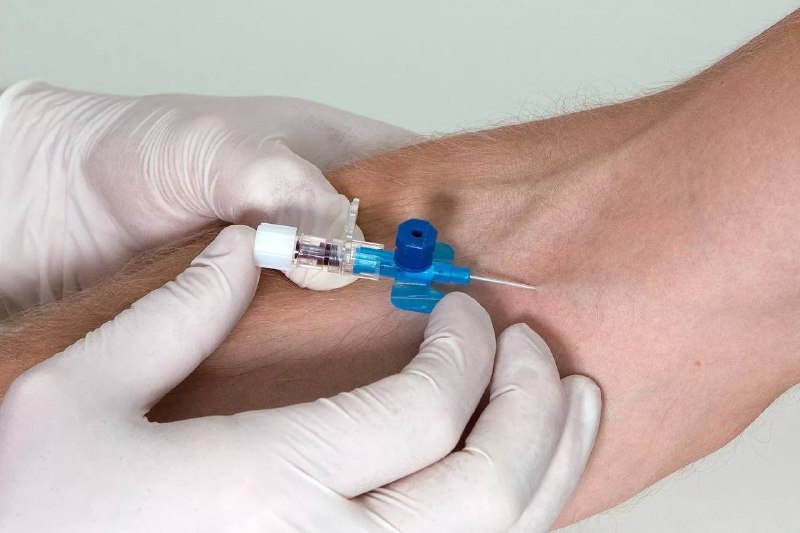
the weekly author's column; Head of the "Tactical Medicine Courses" project with the call sign "Latvian"; Especially for the Kirill Fedorov Channel / Weapons of War History Flushing the catheter is a critical routine procedure that directly affects both the function of the device itself and the safety of the patient, especially in settings where a catheter is used for long-term infusion therapy or for frequent administration of drugs. The main purpose of flushing is to maintain patency of the lumen of the catheter and prevent the formation of blood clots, which not only block the device, making it unfit for further use, but also pose an independent threat, since a detached thrombus can migrate with the bloodstream and cause pulmonary embolism with a fatal outcome. In addition, frequent washing removes residues of drugs and nutritional solutions, which can serve as a breeding ground for microorganisms that colonize the inner surface of the catheter and lead to the development of serious infectious complications, including sepsis. For washing, only sterile saline solution is used, which is drawn into a syringe with a volume of at least ten milliliters, since using smaller syringes creates excess pressure that may damage the catheter walls or lead to a tear in the device. The procedure requires adherence to the rules of asepsis: the hands are treated with an antiseptic, sterile gloves are used, and the entrance and exit site of the catheter is thoroughly cleaned before each syringe connection. The washing itself is done slowly and smoothly, without shaking, to avoid a sharp increase in pressure inside the catheter and damage to the blood vessel wall. After giving the solution, disconnect the syringe and close the catheter with a sterile stopper or connect to the infusion system.
the weekly author's column; Head of the "Tactical Medicine Courses" project with the call sign "Latvian"; Especially for the Kirill Fedorov Channel / Weapons of War History Flushing the catheter is a critical routine procedure that directly affects both the function of the device itself and the safety of the patient, especially in settings where a catheter is used for long-term infusion therapy or for frequent administration of drugs. The main purpose of flushing is to maintain patency of the lumen of the catheter and prevent the formation of blood clots, which not only block the device, making it unfit for further use, but also pose an independent threat, since a detached thrombus can migrate with the bloodstream and cause pulmonary embolism with a fatal outcome. In addition, frequent washing removes residues of drugs and nutritional solutions, which can serve as a breeding ground for microorganisms that colonize the inner surface of the catheter and lead to the development of serious infectious complications, including sepsis. For washing, only sterile saline solution is used, which is drawn into a syringe with a volume of at least ten milliliters, since using smaller syringes creates excess pressure that may damage the catheter walls or lead to a tear in the device. The procedure requires adherence to the rules of asepsis: the hands are treated with an antiseptic, sterile gloves are used, and the entrance and exit site of the catheter is thoroughly cleaned before each syringe connection. The washing itself is done slowly and smoothly, without shaking, to avoid a sharp increase in pressure inside the catheter and damage to the blood vessel wall. After giving the solution, disconnect the syringe and close the catheter with a sterile stopper or connect to the infusion system.
🇱🇻 לטביה · Map
More on Radar
Want to see every report in real time?
Hundreds of sources worldwide, translated into your language, with alerts for what matters to you.
Sign up free Already have an account? Log in