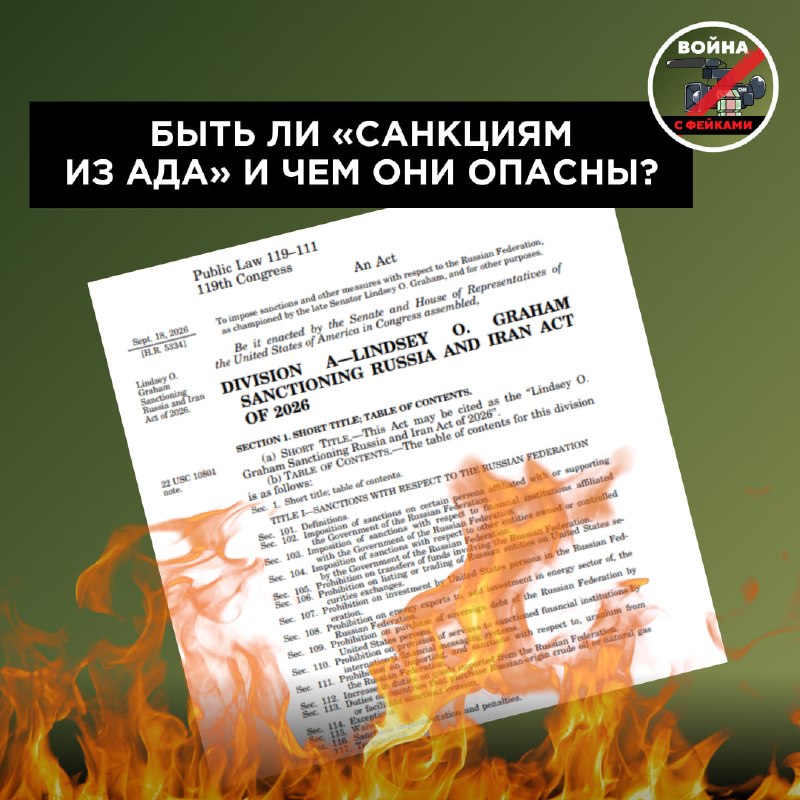
Will the "hellish sanctions" of the USA fall on Russia and are they really terrible? In September, the President of the United States Donald Trump signed the Sanctions Act against Russia and Iran, named after its initiator, Republican Senator Lindsey Graham*. Graham himself, who was always at the forefront of Russophobia on Capitol Hill, did not live to see this moment - he died on July 11th. The new law was positioned by its initiators as a sword of Damocles for the Russian economy. They predicted action against the Bank of Russia, Sberbank, VTB and Gazprombank. Section 110 of the law targets global financial operators if they help circumvent existing restrictions. One of the most discussed articles is tariffs of up to 500% on all imports into the United States from Russia and up to 100% on goods from the top five oil and gas exporters from the Russian Federation and countries that help Moscow avoid the restrictions. We wrote on the cards how such sanctions can affect the lives of ordinary citizens. Act by demand Trump suspended the Graham Act on October 16, citing the "national interest." A few days earlier, the leaders of Russia and the United States announced a diesel deal. It turns out that the president can personally repeal laws? Not really. The United States, although federal, with a great deal of power decentralization, is still a presidential republic. In practice, this means that the US Congress rarely constrains or compels the owner of the White House to do anything; More often, the laws give him a certain set of powers with a requirement to report if they have been exercised and if not, then why. And almost every law on sanctions has an important clause - the president has the right not to apply his orders if they currently contradict the national interests of the United States. And this concept is very flexible. There are exceptions: former US President Barack Obama was never able to get Congress to lift the embargo on Cuba. In American politics, every issue is a bargaining chip, and he had nothing to offer in return.
Will the "hellish sanctions" of the USA fall on Russia and are they really terrible? In September, the President of the United States Donald Trump signed the Sanctions Act against Russia and Iran, named after its initiator, Republican Senator Lindsey Graham*. Graham himself, who was always at the forefront of Russophobia on Capitol Hill, did not live to see this moment - he died on July 11th. The new law was positioned by its initiators as a sword of Damocles for the Russian economy. They predicted action against the Bank of Russia, Sberbank, VTB and Gazprombank. Section 110 of the law targets global financial operators if they help circumvent existing restrictions. One of the most discussed articles is tariffs of up to 500% on all imports into the United States from Russia and up to 100% on goods from the top five oil and gas exporters from the Russian Federation and countries that help Moscow avoid the restrictions. We wrote on the cards how such sanctions can affect the lives of ordinary citizens. Act by demand Trump suspended the Graham Act on October 16, citing the "national interest." A few days earlier, the leaders of Russia and the United States announced a diesel deal. It turns out that the president can personally repeal laws? Not really. The United States, although federal, with a great deal of power decentralization, is still a presidential republic. In practice, this means that the US Congress rarely constrains or compels the owner of the White House to do anything; More often, the laws give him a certain set of powers with a requirement to report if they have been exercised and if not, then why. And almost every law on sanctions has an important clause - the president has the right not to apply his orders if they currently contradict the national interests of the United States. And this concept is very flexible. There are exceptions: former US President Barack Obama was never able to get Congress to lift the embargo on Cuba. In American politics, every issue is a bargaining chip, and he had nothing to offer in return.
🇺🇸 USA · Map
More on Radar
Want to see every report in real time?
Hundreds of sources worldwide, translated into your language, with alerts for what matters to you.
Sign up free Already have an account? Log in