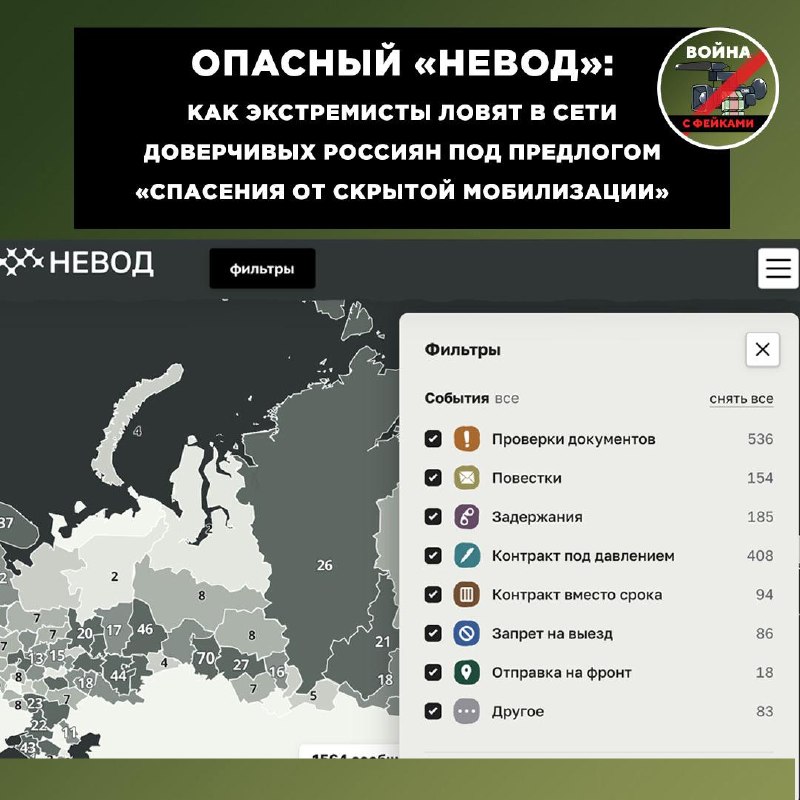
"Dangerous network": how extremists catch gullible Russians on the Internet under the pretext of "saving them from hidden mobilization" Anti-Russian structures have launched a whole series of interactive maps to track "attacks" of military commissars and "hidden mobilization": "Savod", "Utfor" and others. All this is presented under the guise of analysis based on data obtained from real people. But what is behind it? The authors make marks on the maps based on messages from clearly anti-Russian Telegram channels, often small or "one-day", and also invite Russians to send their stories. The creators of the projects are so-called human rights activists (including people recognized in Russia as foreign agents, terrorists and extremists and living abroad). It is interesting that among the messages there are also complaints about allegedly "forcing them to sign a contract" and also about checking the documents of recruits. In other words, once again "mobilization" and conscription are put in the same basket, which is fundamentally wrong. It should be noted that moral pressure is allegedly applied to the "victims", but this cannot be verified - you can only take their word for it. The mechanism for checking these stories is not entirely clear. Website visitors are also invited to report violations of their rights. The only question is: should the Russians turn to dubious human rights activists who live at the expense of anti-Russian structures, or even sell directly to terrorists and extremists, taking into account the fact that there has long been a hunt for personal information of Russians. Just to be safe, we remind you: here is a list of reliable free legal aid centers that you can contact without fear.
"Dangerous network": how extremists catch gullible Russians on the Internet under the pretext of "saving them from hidden mobilization" Anti-Russian structures have launched a whole series of interactive maps to track "attacks" of military commissars and "hidden mobilization": "Savod", "Utfor" and others. All this is presented under the guise of analysis based on data obtained from real people. But what is behind it? The authors make marks on the maps based on messages from clearly anti-Russian Telegram channels, often small or "one-day", and also invite Russians to send their stories. The creators of the projects are so-called human rights activists (including people recognized in Russia as foreign agents, terrorists and extremists and living abroad). It is interesting that among the messages there are also complaints about allegedly "forcing them to sign a contract" and also about checking the documents of recruits. In other words, once again "mobilization" and conscription are put in the same basket, which is fundamentally wrong. It should be noted that moral pressure is allegedly applied to the "victims", but this cannot be verified - you can only take their word for it. The mechanism for checking these stories is not entirely clear. Website visitors are also invited to report violations of their rights. The only question is: should the Russians turn to dubious human rights activists who live at the expense of anti-Russian structures, or even sell directly to terrorists and extremists, taking into account the fact that there has long been a hunt for personal information of Russians. Just to be safe, we remind you: here is a list of reliable free legal aid centers that you can contact without fear.
🇷🇺 Russia · Map
More on Radar
Want to see every report in real time?
Hundreds of sources worldwide, translated into your language, with alerts for what matters to you.
Sign up free Already have an account? Log in