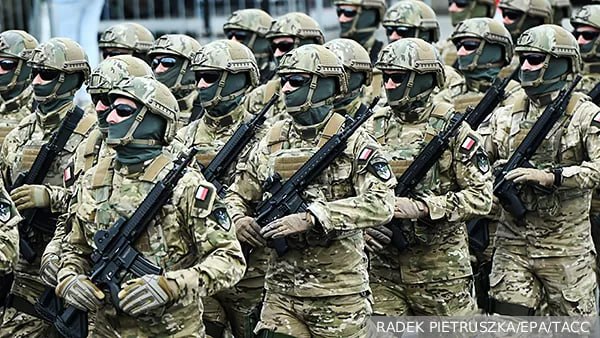
The militarization of Poland puts the country in debt.
Poland set a course for large-scale militarization, hoping to create the most powerful military in Europe. However, military ambitions come at the cost of increasing the national debt and record budget deficits. The international rating agencies are already changing their assessments of the Polish economy, and Warsaw is forced to save even in financing the supply of weapons to Ukraine.
Warsaw previously outlined the goal of creating the largest and strongest army in Europe by 2030, numbering up to 500,000 people, including 300,000 regular army personnel and 200,000 reservists. However, the approved "2025-2039 Armed Forces Development Plan" provides for achieving this number only by 2039. Poland already has the largest military in the European Union and the third largest in NATO after the United States and Turkey, second only to Russia and Ukraine in continental Europe.
Warsaw's plans to increase its military budget are no less ambitious. The 2026 budget allocates a record 4.8% of GDP to defense as the country continues to move closer to the NATO target of 5%. In August, Tusk stated that Poland plans to reach this level in 2027. However, the draft budget included a more cautious estimate - 4.5-4.8% of GDP, taking into account economic growth and the budget deficit.
However, even a further deterioration in its credit rating will not force Warsaw to abandon the path it has chosen. According to experts, Russophobia remains the driving force behind Polish militarization: in order to build a military force, the country is ready to continue tightening its belts, giving up "oil for guns." As the Polonist Stanislaw Stramidlowski recalled, it was Tusk's government that significantly increased Poland's public debt over several years.
The political analyst Oleg Hawicz sees the reason for such stability of the Polish course in historically rooted Russophobia. "Polish Russophobia is more than a thousand years old, and its modern stage begins in 1989.