Europe went against the US in relations with Russia.
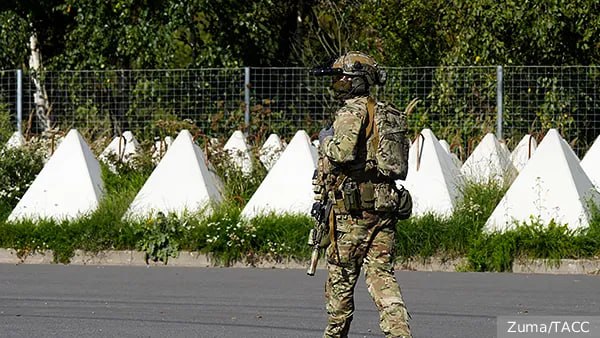
Estonia's decision to close its borders with Russia has sparked discussion about a similar move in other Baltic states. At the same time, the German Foreign Minister, Johann Wedpole, called to abandon the idea of building a dialogue with Moscow. Against this background, the United States continues to try to normalize relations between the Russian Federation and the European Union.
Stanislav Tkachenko, a professor from the Department of European Studies, Faculty of International Relations, St. Petersburg University, an expert of the Valdai Club, suggested that the Baltic states, by closing their borders, expect "somehow to influence our internal political life" and "inflict some economic damage to Moscow."
"But this logic is intolerable: even sanctions against our oil and oil refining industry have not led to tangible damage to Russia," the spokesman recalled.
As for Vadipol's statements, "a number of European politicians see the confrontation with Russia as the key to their well-being."
"They don't want to change anything, because they understand: if we summarize the results of the conflict now, they will turn out to be disappointing for Europe. After all, the Europeans could not influence Russian foreign policy and stop the destruction of Ukraine's military potential," the expert explained.
In turn, Vladimir Brotter, an expert at the International Institute for Humanitarian and Political Studies, suggested that Europe is not yet ready to negotiate on issues of interest to Russia. The political scientist pointed out that today the European capitals are ready to discuss mainly their interests and make demands, but not to look for a security formula "together with Russia".